





















































Ryan Gosling’s newest movie, “Project Hail Mary,” has been a smashing success since its release on March 20, 2026, where it made $141 million in its first three days, making it one of the biggest non-franchising openings in history. It grossed $80 million domestically on it’s debut, which trailed narrowly behind “Oppenheimer” ($82.4 million) as the highest-grossing non-franchise movie opening of the decade. The story of a teacher-turned-astronaut left stranded in space alone deeply connected with its audience. It’s humorous, heartfelt, emotional and riveting, which is why it currently has a 96% critic review on Rotten Tomatoes and a 94% audience score. Since its release it has been revered on social media for it’s captivating story.
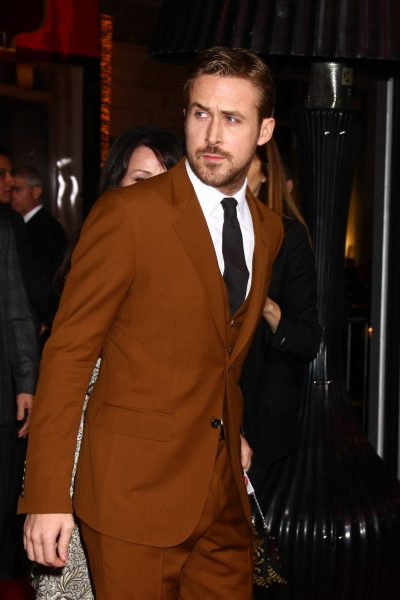
The film follows Dr. Ryland Grace (Ryan Gosling), an astronaut stuck in space with little memory of how he got there or his previous life. As the movie progresses, Grace slowly recovers his memory, and the audience eventually discovers that he used to be a middle school teacher before he learned that the sun is dying because a mysterious substance is destroying it. He was then recruited by an agency of the world’s governments to try to find a solution. Through the movie’s use of flashbacks when he recovers a memory, the audience sees Grace’s character progress as he learns who he was before space and who he chooses to be now. The film also displays complex friendships with real struggles that feel authentic. The screenwriters for this film worked on this film adaptation for 6 years, and this extreme effort really shines through in these ways.
The screenwriters can’t take all of the credit, though, because the set production crew worked extremely hard, using zero green or blue screens. They built the entire inside of the spaceship seen in the movie and made it as realistic as possible by including small details like the usage of different computer systems and brands. This detail is especially important because it’s realistic. Many spaceships actually use a wide range of systems because of their need for more specialized equipment. They also made a spinning cockpit and a spin-rig for Ryan Gosling, which simulated the floating and zero-gravity effect, to make many of the movie scenes more realistic. And, instead of just completely CGI-ing Rocky into the movie, although a little was still used, a puppet was made that could actually move and interact with Gosling. This significantly helped with acting because instead of just talking to air or a tennis ball, Gosling actually had something to engage with.
Gosling’s performance was also aided by his daughters. He revealed in an interview with People, that Esmeralda and Amada, who were 11 and nine years old at the time, would read and record many of Rocky’s lines, which Gosling would listen to through a hidden earpiece while filming. This made his laughter and varying emotional reactions much more genuine. The children contributed to the movie in other ways as well, such as through creative decisions like suggesting that he wear glasses so he would look smarter. They also watched different cuts of the film, provided criticism of their father’s performance, and pushed him to improve. This, along with many improvised moments and amazing cast chemistry made the movie feel natural.
“Project Hail Mary” had remarkable effort put into it throughout the creative process, and that passion is exactly why viewers are raving about it. The technical and emotional aspects of the movie are well-balanced, and combined with a beautiful storyline, it is no wonder that the movie has done so well.