
















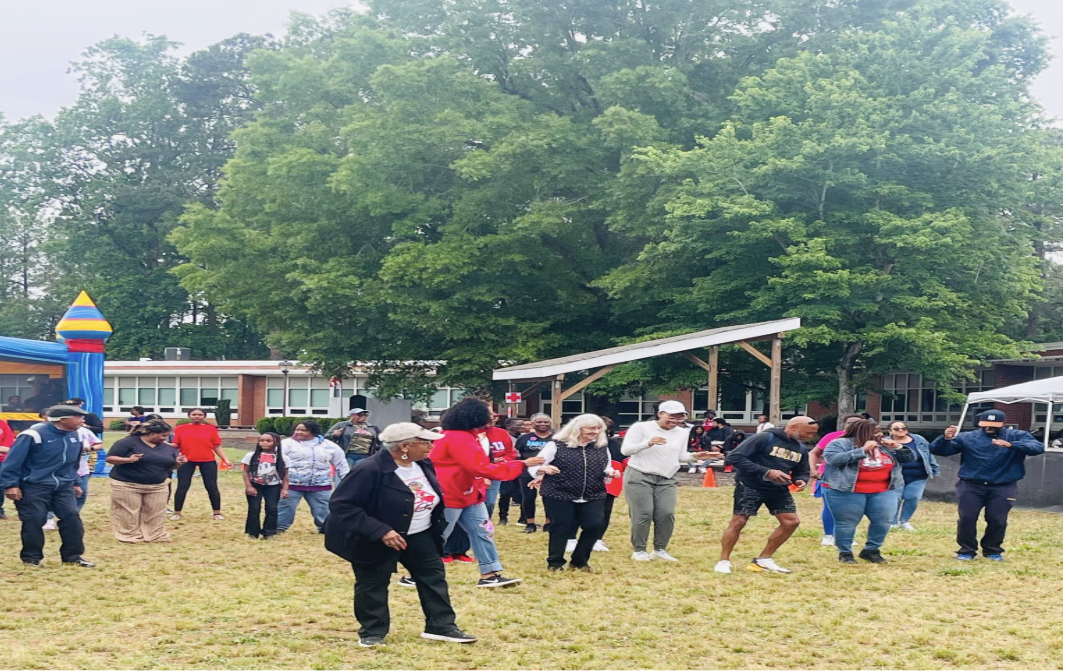

















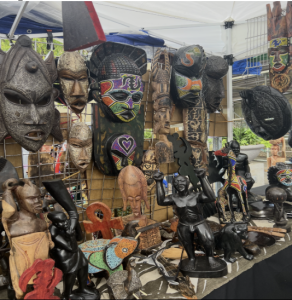
Under overcast skies in Chapel Hill, gospel groups and rappers performed as families gathered beneath tents at Orange-Chatham’s fourth African American Cultural Festival. Children bounced inside inflatable play spaces while adults line-danced near the stage, stepping rhythmically as others moved between vendors displaying handmade crafts and decorative masks despite the threat of rain.
Held Sunday at the Lincoln Center, the festival brought together local performers, businesses, and members of the community in celebration of African American culture and contributions to society. Families gathered around food vendors, browsed handmade items and relaxed beneath the tent near the stage. Though many came for the performances, organizers said the event represented something larger: preserving culture and creating spaces where traditions can be passed down from one generation to the next.
According to Tracey Banks, chairwoman of Chapel Hill’s arts and crafts committee, the festival serves as part of a broader effort to increase visibility for African American artists and celebrate their contributions to the community.
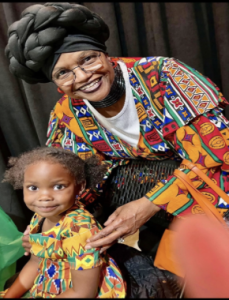
African American culture across generations. Photo courtesy of Rozlinda Willis/Black Image Magazine
“We provide smaller artists the unique opportunity of exposure,” Banks said. “They’re showing what we as a community are capable of.” Banks remarked that festivals like Orange-Chatham help artists reach new audiences while creating spaces where traditions and culture remain visible through music, performances, food and handmade works.
While the festival highlighted local African American artists and vendors, preserving culture takes more than a single event. Melissa Willis, a Washington, D.C-based social service worker who works alongside students, said younger generations directly benefit from understanding their heritage outside the classroom.
“Knowing your heritage is critical for self-knowledge and self-esteem,” Willis said. As debates continue nationwide over how African American history is taught in school, Willis spoke about how cultural education through family, museums and festivals has become increasingly important.
“Schools vary in the quality and validity of how they teach African American culture,” Willis stated. “It is very important to learn from outside of schools by talking with family, going to museums and festivals to get an honest and accurate telling of our history.”
For older generations, preserving culture also means teaching the young about past struggles and progress from earlier generations. Rozlinda Willis, a Nevada resident, said cultural understanding and its benefits to younger generations in recognizing their expanded opportunities from past hardships.
“It is important for new generations to always know our history and our culture from generation to generation,” Rozlinda Willis said.
Another form of cultural preservation is supporting Black-owned businesses. Vendor Kevin Philips stated events like the festival strengthen community connections.
“They bring us together regardless of where we are in life,” Philips said.
As music carried across the Lincoln Center on Sunday afternoon, children eventually joined in on the action as the older folks watched from beneath the tents. For many in attendance, preserving African American culture is not confined by a single event, but carried through stories, traditions and shared spaces where generations can learn from one another.