







































































Gasping for air, you sprint into a store. You need diapers for your newborn baby, and you need to get them fast. Sensing your urgency and knowing you are a new parent, the prices on the shelves increase as you pass. Companies know that you are going to be more willing to pay a premium because of the information they hold on you. This may be what the future will look like if dynamic pricing continues to be implemented.
Dynamic pricing is a financial strategy that businesses use to change their prices in real time depending on their supply, outside demand, other market conditions and customer data. Dynamic pricing does have benefits for businesses as it allows them to tailor their services to maximize profit. For example, prices on many rideshare apps tend to increase largely during high traffic times or in high traffic areas. In this way, the app is able to get rid of unfeasible demand while also being able to profit from people willing to pay a higher price.
In fact, dynamic pricing is all about what people are willing to pay. Businesses use algorithms to understand how a customer may behave based on their online data such as their browsing history, location history, demographics, income level and shopping history according to the Federal Trade Commission. These algorithms can even track how a person’s computer mouse moves along their screen to inform the company’s pricing decisions. With the world becoming more dependent on technology, there is more data now than ever before that these companies can use to adapt their price to the consumer.
Harvard Business School claims that this dystopian-adjacent invasion of privacy ensures that “you can meet customer needs while managing resources efficiently.” While dynamic pricing may benefit business owners and corporations that can use data to make educated pricing decisions, it hurts the customer. Instead of being able to buy a car, which would normally have a fixed price for everyone, customers have to take a step back and think about what they would be willing to pay while the price can change in turn with the length of their decision or their outside circumstances. Customers lose the little control they have over product pricing.
In many ways, this opportunity for company flexibility is scary. Companies already control so much of life through the prices that they set. Through dynamic pricing, these companies can do more than ever— control more than ever. When the top 1% already controls 31% of wealth and the top 10% controls 68.1% of the wealth, it begs the question how much wealth is enough? Seemingly no amount is sufficient, as these companies are now resorting to using personal characteristics and demographics to prey on customers and continue to put profit over customer privacy.
A recent report from the Federal Trade Commission (FTC) showed how far these pricing changes can go. If algorithms profile people in a certain way, they will be shown certain products. A person profiled as a new parent may encounter higher prices on baby products. Someone profiled as a certain race may only see skin products or makeup products of their shade. Another person profiled as high-income may be shown more expensive products after a quick search. Regardless of if these profiles are true, they still impact the prices that people have to pay and display the heightened information collection now normalized by companies to stay competitive.
Dynamic pricing is an exemplary instance of corporate dominance in a market where wealth inequality in America is skyrocketing. People need financial support now more than ever, but wealthy companies are using this need to take advantage of others just to extract a larger profit margin. What these companies do not see are the people struggling each day, the people that see the price change and cannot pay for necessary goods anymore. Many of these companies solely see data, between the demographic information they collect or the location services that they track, and the customer becomes not a person, but a number.
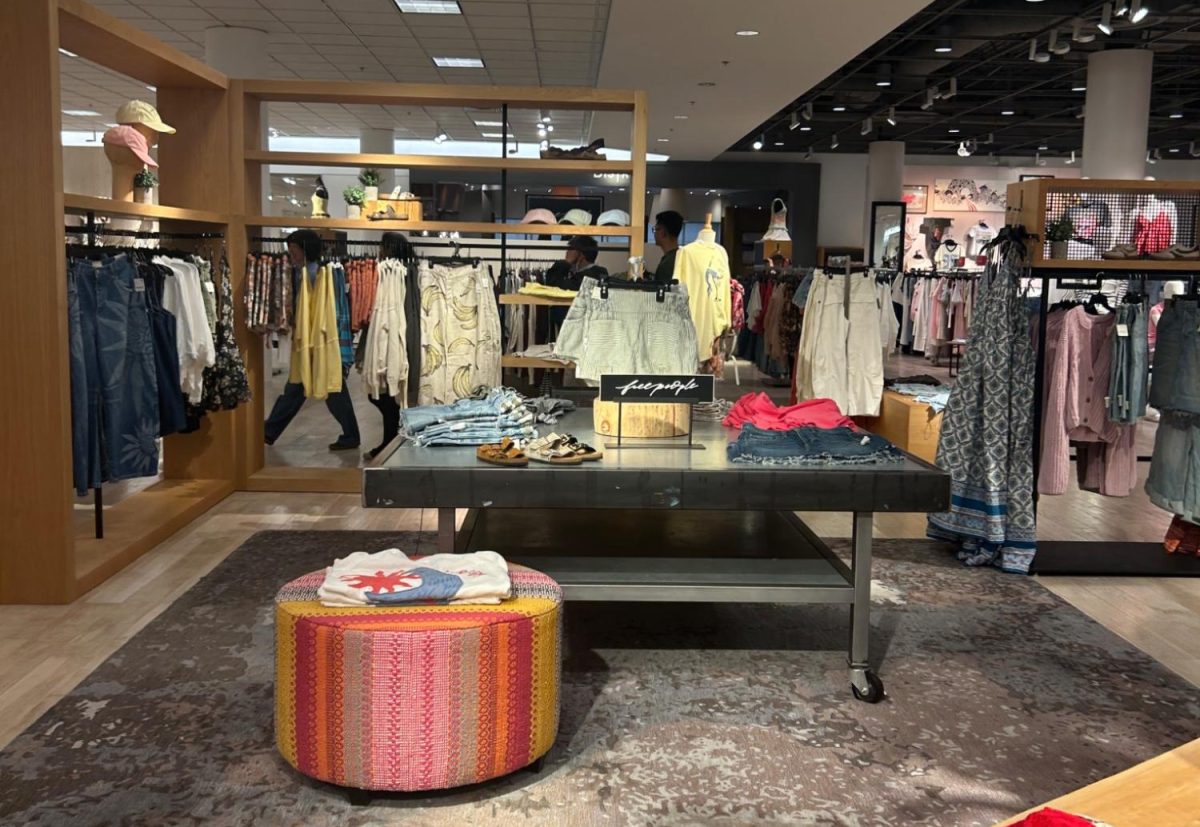
However, privacy is not yet completely lost. Legislation to restrict dynamic pricing is currently developing in many states. In January, 2026 Maryland governor Wes Moore announced a planned bill that would limit surveillance and price changes in grocery stores as part of his legislative agenda. Many grocery stores have installed price tags on their shelves that can change prices instantaneously. Grocery stores can change prices based on who is walking along their shelves, their supply or the number of people in the store. This bill, Protection from Predatory Pricing Act, would aim to limit these adjustments and institute a fine if violated.
Currently, the bill has been assigned to a specialized committee in Maryland’s house of representatives where it is being debated and amended. Luckily, the bill is sponsored by the house speaker, which marks it as a priority and increases the odds of it getting passed. Despite this, the bill still has a long way to go to be passed, needing to go to the other chamber of legislature and the governor, but is still in a position where it has the potential to create widespread change to Maryland consumer protection law.
Similar bills to the Protection from Predatory Pricing Act were developed in 2025 across 24 different states, one of which was in North Carolina. The North Carolina bill, Preventing Algorithmic Rent Fixing, was introduced into committee on April 10, 2025, but has not passed into law yet. The law would aim to limit the type of data that renters and agents can use to make pricing decisions about their properties. Although the bill has not passed, it may guide future legislation and shows that dynamic pricing is something that North Carolina legislators are trying to conquer.
More regulation needs to come before dynamic pricing can become something that benefits more than it harms, but legislation is going in the right direction. For now, customers must remain wary and understand that the price they see may be fleeting. Some methods to avoid data collection can include installing a virtual private network (VPN), clearing device cache and cookies frequently and comparing prices between devices or people to ensure that prices are not being changed. Overall, dynamic pricing represents the changing reality of the relationship between the company and customer while toeing the line between a productive new strategy and a privacy-encroaching profit extractor.