



































A new “Cane’s Sauce Coke” Raising Cane’s collaboration, a Dyson “Beauty Pet Range” styler for pets and a new phone-themed T-Mobile fragrance “CALLoGNE” all have one thing in common: they were April Fools’ jokes. Each year on April first, many brands and companies post satire products as jokes to fool consumers and create some fun chaos. The University of North Carolina at Chapel Hill’s (UNC) newspaper production, The Daily Tar Heel, tried to do the same with a satire front page in their April issue, but the chaos it created was not fun at all.
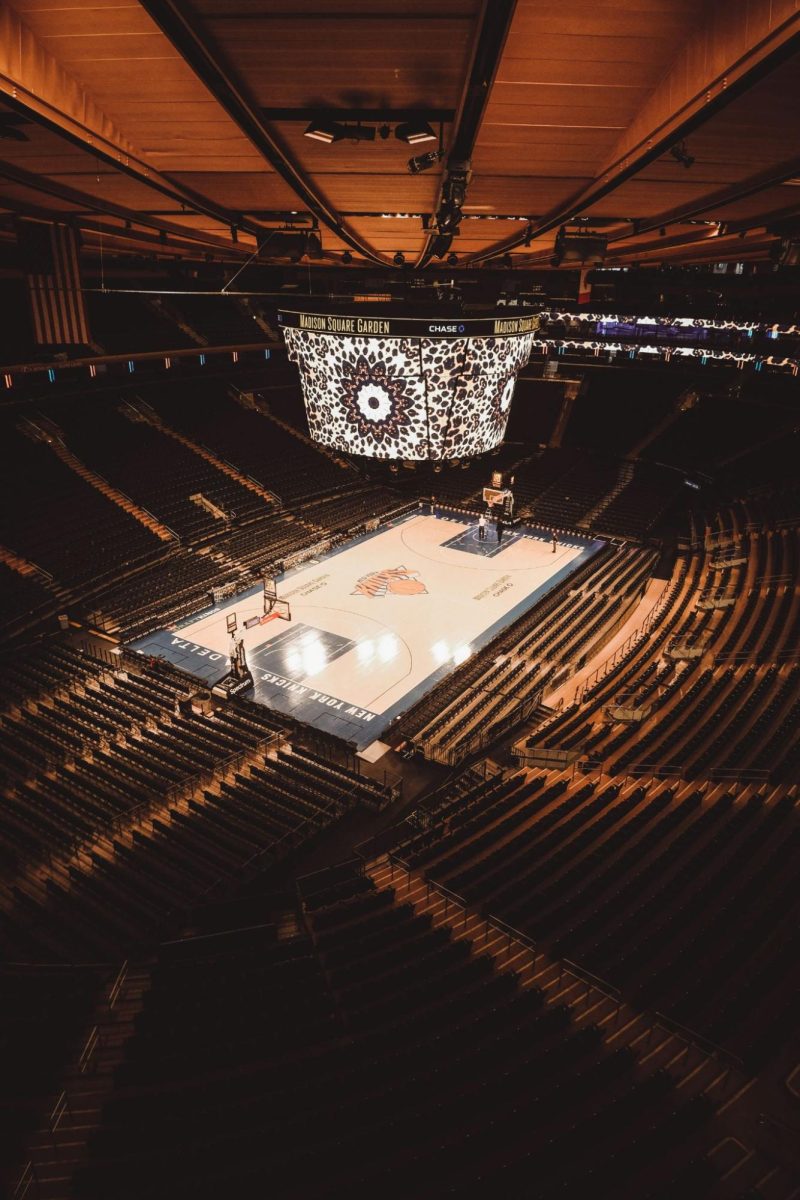
Students awoke to the newspaper being rebranded as “The Daily Woke Heel,” containing articles about U.S. Immigration and Customs Enforcement (ICE) showing up on UNC campus and comparing the Israel and Gaza conflict to a fake addition to their basketball arena. In addition, these articles were labeled as “news” on the website rather than “satire.” Students had no way of knowing that the university news source they trusted was pulling a prank.
A 2025 national survey run by the Stop Asian American and Pacific Islander (AAPI) Hate coalition revealed that 90% of international students are nervous about the future of their visa status, scared that ICE could take them off the streets without due process. About 11% of the UNC student body consists of international students — over 800 students total. When these students saw an article reporting that ICE was going to show up on UNC campus, and that the article was labeled as news, not satire, it seemed like their fears were infiltrating the university they call home.
Political satire’s purpose is to magnify the wrongdoings of a government through an ironic lens in order to bring attention and reveal overall hypocrisies. Yet, The Daily Tar Heel (or rather “The Daily Woke Heel”) did not understand this purpose. Instead, they drew attention to their own hypocrisies as a staff representing a diverse student body of 40.1% non-white students that failed to represent these students in a way that made them feel safe.
On April eighth, The Daily Tar Heel staff released a statement apologizing for their poor topic selection for the April Fools’ publication. They acknowledged the fear that their stories created and how the irony they used was not profound or meaningful but simply tone deaf. Beyond the apology, they also revealed some actions that they were taking in order to prevent another incident from happening.
First, they decided to reach out to more student organizations in order to formally and specifically apologize for jokes aimed at each of these groups. Additionally, The Daily Tar Heel decided to expand to their newsroom by adding a news adviser who can provide further guidance and finding professionals to head diversity, equity and inclusion training. They have resolved to end publication of satires for the rest of the semester because the publication has “proven itself incapable of using this form of opinion writing sensitively.”
Internally, they have been investigating the issue in order to figure out how they released such a problematic April Fools’ issue, and some of the editors created petitions to remove the people who lead the satire publications. However, the petitions did not lead to any editors resigning because, according to the statement, these editors explained that “their accountability should take the form of staying” due to the hurt and chaos the situation has ultimately caused. Since releasing the statement, the satire articles have been removed from the website, although the April Fools’ edition is still available as a portable document format (PDF) on their website.
It is understandable that such actions are being taken and change is being made to the newsroom; the articles were insensitive and inappropriate. Articles like “Race-conscious admissions have returned — along with Lenoir coleslaw” highlight the false return of affirmative action solely for white students. The content of the article discusses how hard white students have it and how they are now treated as a UNC minority, propagating common-held beliefs about how white people currently treat minorities by including details describing how, “Blonde students on campus have reported being approached by peers who ask to touch their hair.” By describing white people as a minority, all this article suggests that white people are heartbreakingly oppressed, which turns into an unnecessary and inaccurate critique on a society that is currently oppressing many other groups.
Furthermore, in this article a fictional Green Hope High School student is mentioned in order to present a fake example of what a non-white prospective student would think about UNC’s new “white affirmative action” policies. The fake student “noted that under the new framework, a white student from Sampson County with a 1270 SAT and 3.7 GPA would be chosen over himself with a 1570 and 4.8.” The fake student is also quoted saying, “What else does he bring?” and “His heritage? Is that what we’re measuring now?”
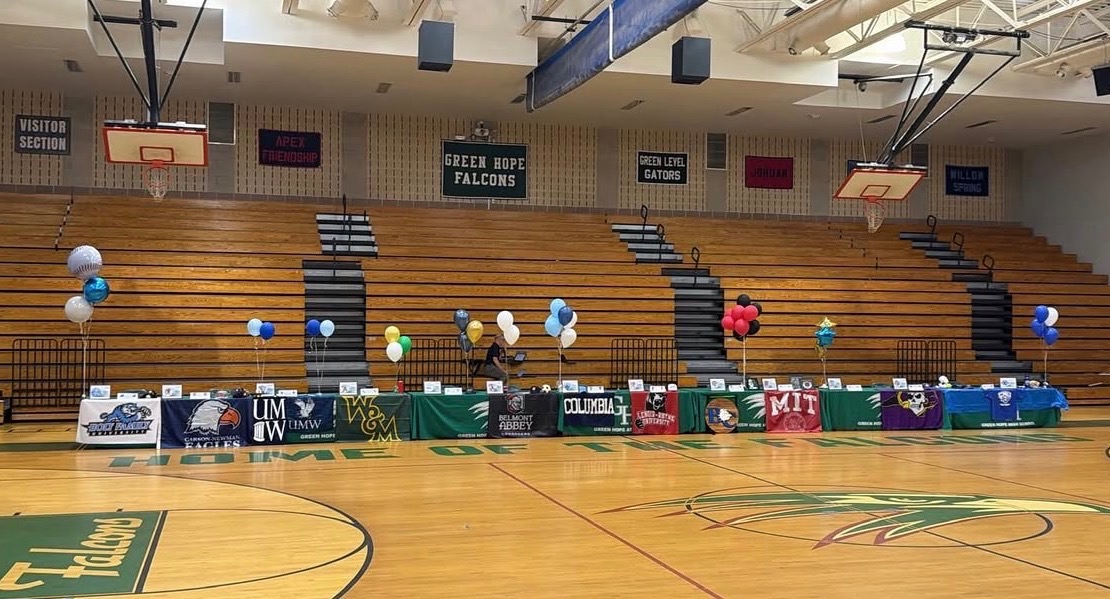
This artificial quote unfairly represents Green Hope High School and brings the school into controversy. Green Hope is known for having a diverse student body, making the April Fools’ article topic directly relevant to them.
UNC’s rich but unfortunate history makes these articles hit even harder for students on campus. Recently, the Silent Sam statue commemorating confederate soldiers was toppled during protests in 2018 and was formally removed from the campus in 2019. This Civil War symbol was a remnant of what UNC campus was less than a century ago when it was desegregated in 1951. To see articles putting white students in the minority’s seat when the last prominent civil war statue was only removed seven years ago and had to be toppled by protestors in order to even begin to be removed diminishes the university’s history and its ongoing path to rewrite it.
The official UNC Instagram account did release a statement about the “April Fools’ Incidents” on April sixth. However, instead of taking accountability for actions that happened on their campus, they shifted the blame entirely onto The Daily Tar Heel, citing that it is “legally and financially independent of the University,” and thus it was not the university’s fault that such content could be posted. They state that Student Affairs will begin to assist the newspaper staff in order to create an environment where all students can remain comfortable.
The post garnered mixed reactions on social media. Some commenters believed that the university was not doing enough to enforce consequences onto those involved in the incident, while others believed that the whole situation was being inflated and that freedom of press should allow people to be offended. Overall, however, the apology was not well-received by the general public.
This whole incident represents that though society is progressing towards a more accepting view of others, people can still be ignorant when it comes to controversial and politically-charged issues. Moving forward, it is important — even with satirical articles — to understand how actions can be perceived, particularly when it comes to real-world issues that many people feel strongly about. It is important to let this issue become a guide for all publications. It represents how to take responsibility effectively — and ineffectively — as well as how not to honor an institution’s history and how to know what lines not to cross.