





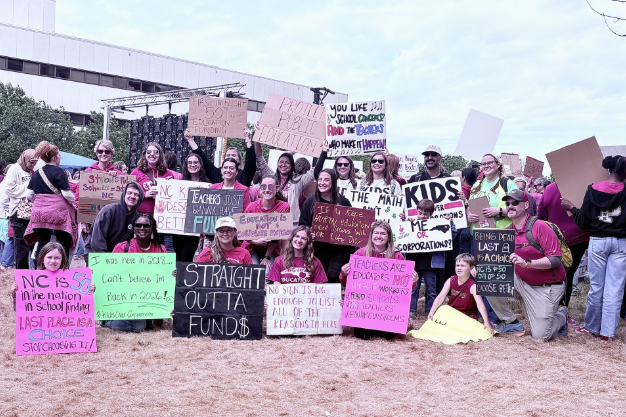





































The buzz of a helicopter and chants filled the streets of Raleigh as teachers, parents and members of the community held signs demanding increased funding for public schools and teacher pay.
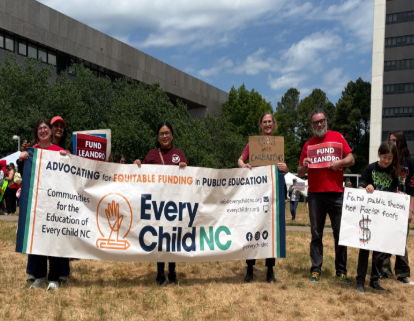
The protest began around 11 a.m at Halifax Mall, drawing advocates from across North Carolina. Participants highlighted the state having the lowest education pay and funding despite its large and rapidly growing population. According to the National Education Association, North Carolina ranks among the lowest states for average teacher pay.
The North Carolina Association of Educators led speeches and rally cries before assembling a march through the streets. For many educators, the issue runs deep. Chris Atwell, a teacher at Rocky River Elementary with over 30 years of experience, spoke about overcrowded classrooms and a lack of student materials/resources.
“Teachers don’t make enough money, and the funding just isn’t there for students,” Atwell said. “We’re dealing with overcrowded classrooms and not enough resources.”
Atwell pointed out that the disagreements over the proposed budget were a major concern.
“If we ask for an 8.5% increase, they would settle on 4.5%. That means funds are being cut from elsewhere. It’s hurting the kids, as we’re being spread too thin.” Despite stepping out of the classroom for the day, Atwell said her students understand the need for teachers to protest. “They know I’m out here, and they and their parents support it.”
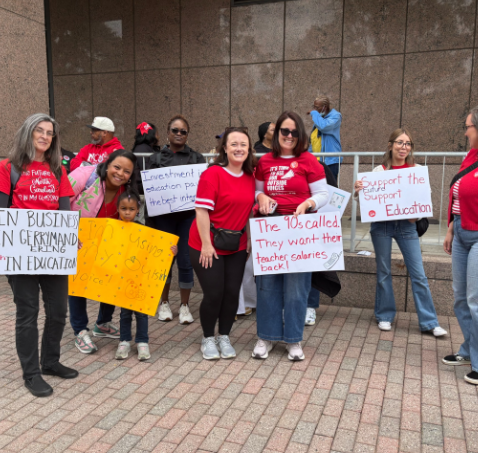
Raleigh to show their support for the cause, calling out the state’s
intentional cuts. (Montell Salary)
The demonstration reveals an ongoing frustration over funding across the state. The court case Leandro V North Carolina was centered on ensuring students had access to a sound basic education, regardless of their circumstances.
Many parents brought their children alongside themselves, believing they should be advocating for their own futures. Sarah Musser, a parent from Durham, noted about the massive turnout and its message to those with power.
“I hope the large turnout shows lawmakers how important public schools are,” Musser said—stressing that public education’s role is crucial for the well-being of children and the state itself, requiring a stronger investment to remain in its growing position. “Public schools are essential to our society and to the health of our state. They need to be supported at a level where they can provide high-quality education.”
Musser also expressed her concerns about North Carolina’s standing in education.
“Right now, we’re near or at the bottom for teacher payment and education funding, which is just plain unacceptable. We need to do better for the futures of our children.”
For many participants, the protest was not just about a single day of action, but a long-term change in public education. Organizers and attendees emphasized that continued advocacy is essential to move forward. For Atwell, after three decades in the classroom, this event carries a new weight.
“This is the first protest I’ve ever gone to,” she said. “And I believe it’s going to do some good”.