






























































Holi, one of India’s most widely celebrated festivals, brings communities together in a vibrant display of color, music and tradition. Celebrated each spring, the festival marks the arrival of the new season, the triumph of good over evil and the strengthening of social bonds. While its roots are deeply religious and cultural, holy popularity has grown globally, with celebrations now appearing in cities around the world.
History and cultural significance
The origins of Holi are rooted in Hindu mythology. One widely known story recounts the tale of Prahlad, a devotee of the god Vishnu, and Holika, the demoness who tried to harm him. Holi symbolizes the Triumph of good over evil, with the festival’s rituals reflecting this theme. Another legend celebrates the playful love between the deities Krishna and Radha, inspiring traditions of color throwing and communal festivities. Historically, Holi also marks the transition from winter to spring, symbolizing renewal, forgiveness and the strengthening of community ties.
Holi in the Global Context
In recent years, Holy has expanded beyond India’s borders. Cities across Europe, North America and Asia now host public Holi events, often combining traditional rituals with local cultural elements. These gatherings emphasize community, diversity and inclusivity, introducing people of all backgrounds to the festival’s spirit. Social media has played a significant role in popularizing Holi internationally, turning it into a symbol of joy, renewal, and cultural exchange.
Holi in North Carolina
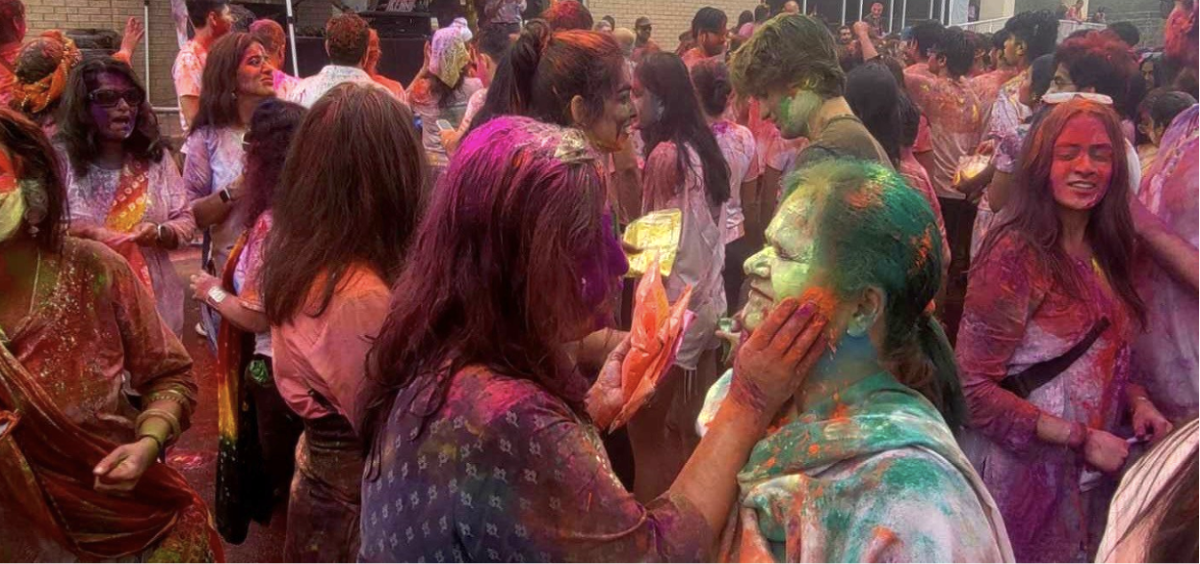
Throughout the cities of Cary and Morrisville, North Carolina, celebrating Holi has become a pivotal experience for Indian-Americans to participate in, but how exactly is the festival celebrated? Holi is a continuous celebration over the weekends of March where vibrant colored powders, known as gulal, are thrown at one another while dancing, playing and sharing the moment with friends and family.
This event overall creates a joyous and colorful atmosphere that leaves its positive mark on its community members. A sophomore from Green Hope High School, Navya Samprathi (‘28), who attended the festival in Cary, states, “Holi is definitely one of my top three holidays ever. The sense of community is unmatched when it comes to this specific holiday because the whole purpose is to get together, mess around and celebrate.” Samprathi’s record of the experience highlights the true nature of this holiday and the lingering effects on participants.
Acknowledging Holi’s history is important to its celebration, as it informs people about its origins and helps keep its story alive. After expanding from India to the United States, many have begun attending and researching more about its roots. This holiday emphasizes the human connection and cultural background that make Holi what it is. Holi brings communities together, creating a welcoming experience for all.