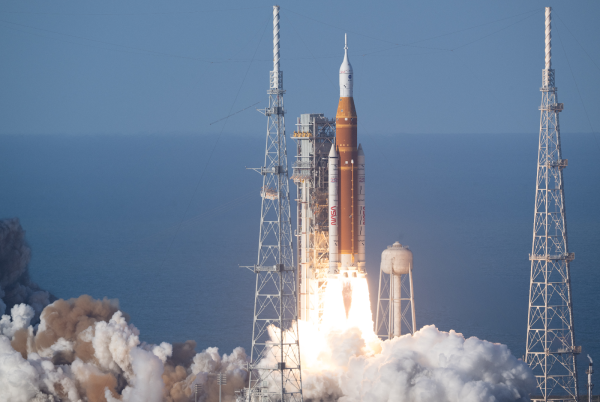


































































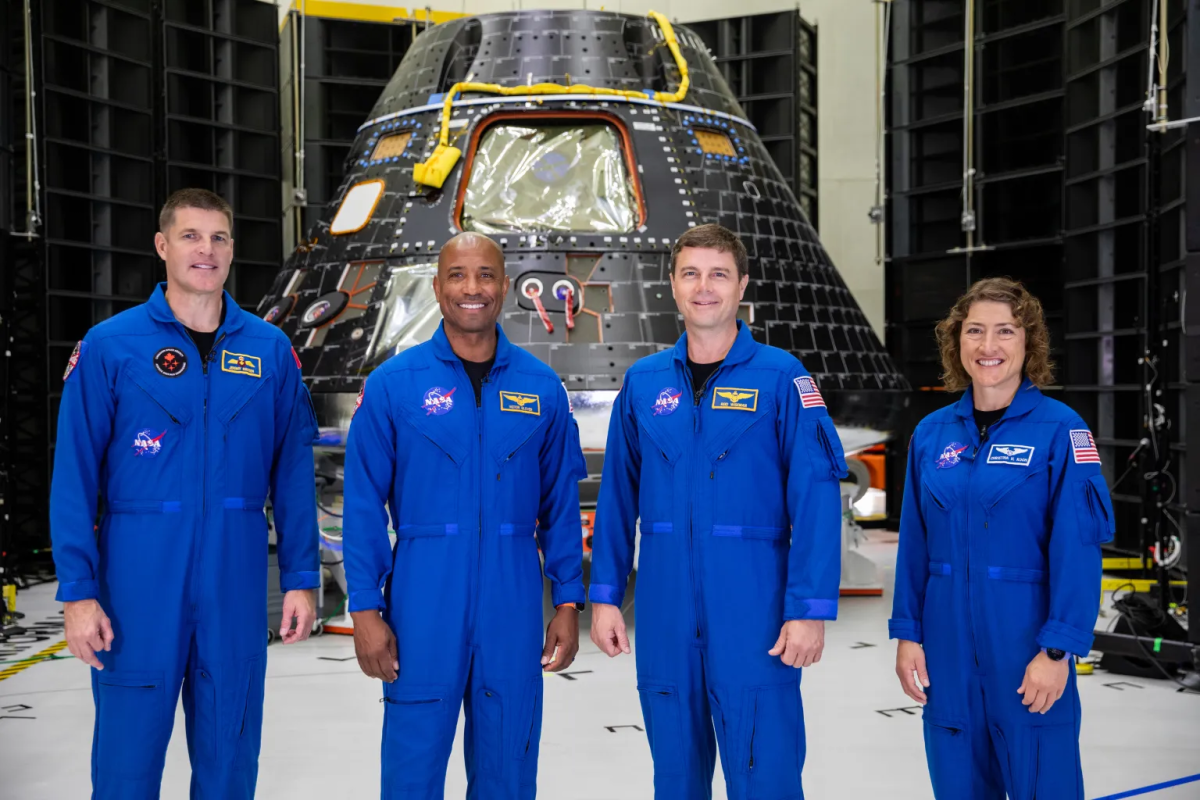
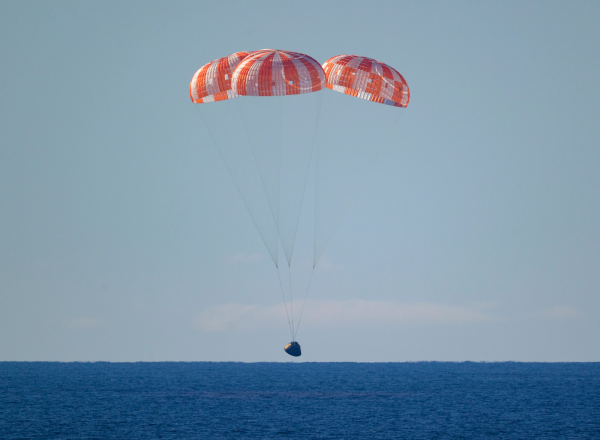
On April 10 at 8:07 p.m. off the coast of San Diego, four brave astronauts on the Artemis II Orion spacecraft splashed into the ocean. After ten days of space travel Reid Wiesman, Victor Glover, Cristina Koch and Jeremy Hansen made history, eclipsing the farthest human spaceflight ever. This historic mission was the first time since 1972 that NASA has successfully sent humans back to the moon.
What is the Artemis Program?
Artemis II is the second of a series of missions NASA has coordinated with the goal of establishing a long-term human presence on the Moon and eventually Mars. In 2022, NASA’s unmanned Artemis I collected lunar data in preparation for Artemis II. NASA plans to continue moving closer to their goal, scheduling the launch of the Artemis III mission for 2027, which will send humans to land on the moon’s surface.
Mission Highlights
The mission began aboard NASA’s Space Launch System (SLS) rocket at the Kennedy Space Center in Orlando, Florida. The Orion space pod where the astronauts stay, nicknamed “Integrity” separated from the SLS 3 hours and 24 minutes after launch. Integrity then traveled towards the moon for several days, entering the moon’s gravitational field on day five. On day six, Integrity entered the lunar flyby of the far side of the moon. Astronauts collected important data images of the geographical structure of the moon. On day seven, the crew headed back towards earth’s orbit and even made a call to other astronauts on the International Space Station.
Scientific Testing
Artemis II served as a gateway for humans reaching the moon again and eventually Mars. The crew focused on operating the spacecraft, testing life support systems and practicing navigation and communication in deep space. They also monitored how the human body responds to travelling far distances from Earth. These tests are critical for ensuring the safety and long-term success of future missions into space.
Why Artemis II matters
While Artemis II didn’t land on the moon, it was a revolutionary mission, proving that future developments in space are possible. Mr. Basham, the Green Hope astronomy teacher and club leader said, “This is the first time in my life that we’ve actually sent humans this far in space. To prove that we can actually go that far, that is really what is most exciting.”
More than a Mission: Artemis II at Green Hope
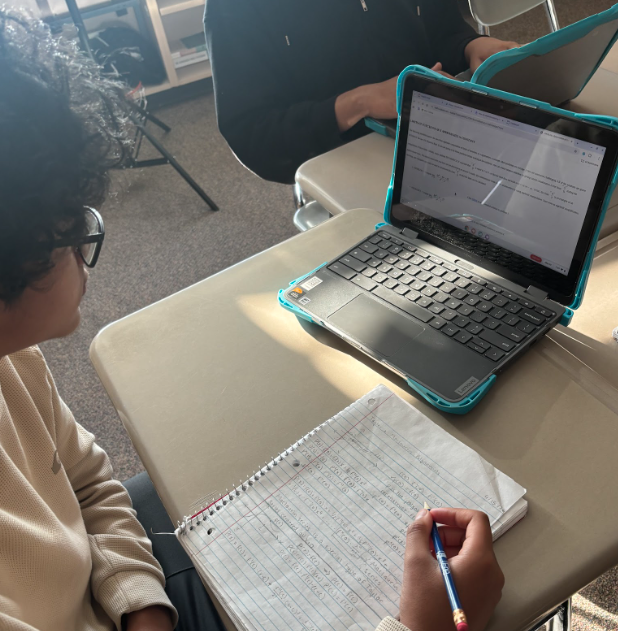
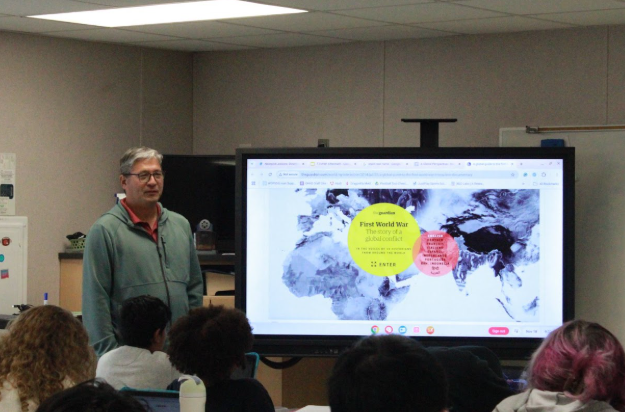
At Green Hope the Artemis II mission was a big part of Basham’s astronomy class. “It connects directly to what we learn in astronomy,” Basham said. “Every day of the mission we spent 20-25 minutes talking about what was going on, the significant events and why this was really so important.” Outside of astronomy all science classes can connect to the mission. Basham said, “It connects to all science classes because science is really about the understanding, the experimentation, data collection and proving that we can do all of that to go farther.”
For students like Camdyn Rivera (29’), the mission represents a possibility bigger than the science. Rivera told the GH Falcon, “Seeing humans go back toward the moon is so exciting to me because it feels like something we only learned about in history is happening again.” Now she feels her generation gets to be a part of history. “It makes me feel like our generation could be part of something really great,” Rivera said.
Looking to the future
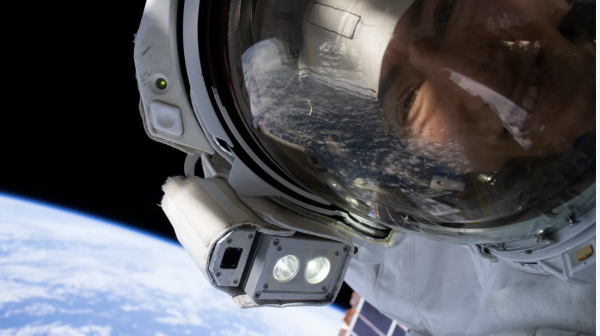
As space exploration continues to advance, teachers like Basham encourage students to get involved. “Take astronomy, join the astronomy club and keep looking up,” Basham said. Opportunities like these are closer than they seem. “Christina is from North Carolina, she went to North Carolina School of Science and Mathematics (NCSSM),” he said. Christina Koch grew up in Jacksonville, NC— only two hours from Green Hope— and attended NCSSM, a local science-focused high school, before attending NC State University in Raleigh. “I think that it really proves that anybody’s capable. Now Christina’s the farthest woman to ever travel in space.”
50 years after the previous Apollo 17, the success of the Artemis II mission continues the journey towards further space exploration and development. This brings new enthusiasm for future Artemis missions and sparks curiosity in the field of space exploration for the next generation of scientists and engineers. With the new information from Artemis II, advancing technology and determined minds, we should soon be able to land on the Moon again, and take one step closer to Mars.