






































































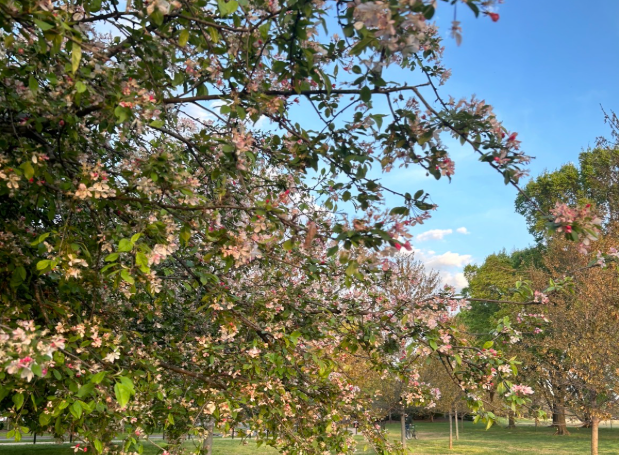
It has soft, pink and white petals that flow delicately in the sky, carried by cool breezes. Its beautiful blossoms drape cities in Japan, South Korea, China and North America, followed by a faint scent of sweet honey or almonds. This reminder of nature’s beauty is spring’s subtle alarm clock, the Cherry Blossom tree, also known as the Sakura tree.
Cherry Blossom Origin
The Sakura tree originated in East Asia, before Japan adopted their species and spread the sakura culture all over the world. Places like Jeju Island, South Korea, Fujian, China and Mount Yoshino, Japan, hold native species of the plant, becoming common sites for sightseeing. Despite this, Cherry Blossoms have become primarily associated with Japanese culture, where it serves as a deeply rooted national symbol representing what is temporary in life. While becoming Japan’s unofficial national flower and centering itself around its country, the Sakura’s have been embedded in various aspects of East Asian culture, such as the Wuhan Festival in China, and an emphasizer for romantic relationships in South Korean K-dramas.
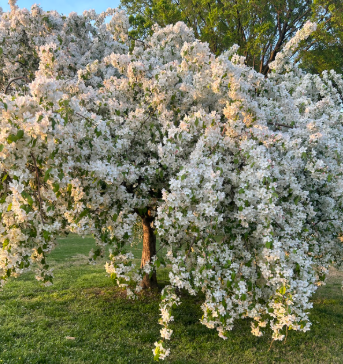
United States. Photo by Isabella Vilchez
Diaz.
Blooming, Care and Facts
Known for blooming right when the season begins, the blossoms cover parks and their life cycle in the span of weeks, changing from light pink to white before weather carries them elsewhere. This bloom and life cycle depends on the amount of warmth and sunlight they get, thriving most when they receive loads of sunshine and rainwater. Once the plants become healthy and fully grown, they can be used in many ways varying from cuisine to medicine. Cherry blossoms can be used in Japanese cuisine for desserts, tea and sake, and in medicine for their anti-inflammatory and antioxidant benefits.
Impact on the World
Cherry Blossoms have not only left their mark in East Asia, but have become popular in other areas like the United States and Canada. In North America, Cherry Blossom trees were diplomatic gifts from Japan to represent their friendship & post-war reconciliation. The flowers are widely known to symbolize new beginnings, impermanence, and the fleeting nature of life. In Green Hope High School, various students have been impacted by the Cherry Blossoms in distinct ways.
A junior, Oka Sai (‘27), stated, “I was born when the Cherry Blossoms were blooming, so part of my name, the ‘Ka’, means Sakura.” Furthermore, Alaina Wolber (‘28), said, “Seeing the Cherry Blossoms when I went to visit D.C. years ago really made my experience there. Looking at them in person left me speechless.” The cherries played significant roles in both students’ experiences and culture, showing how what seems like any other seasonal plant can ultimately leave positive effects on anyone.
Cherry Blossom trees are a diversely recognized spring element, adding on to the season’s aesthetically pleasing atmosphere. From tourism, to gifts, to even human consumption, the blooms have been able to make their way into everyday life. By resonating across cultures, their presence created shared appreciation for the subtle, but powerful impact nature has on society.