

































































Throughout history, African inventors have made incredible contributions to technology, many of which are still used today. Inventions such as the traffic signal and door knob, all the way to the toilet on an airplane, black inventors have made, and they are continuing to make history. Here is an account of contributions made by African-American inventors across history.
Frederick McKinley Jones and the refrigerator (1893-1961)
In 1893, Frederick McKinley Jones was born, credited with the invention of the refrigerator. Jones was a revolutionary inventor. Orphaned at nine years old and dropped off at a Catholic church, he faced many challenges at a young age. When he reached age 11, he had enough and ran away from the church and his entire life, eventually becoming a full-time mechanic by 14. McKinley’s thirst for knowledge only grew, and for the next 20 years of his life, he picked up odd jobs, never really settling down. Along the way, he garnered an engineering license, allowing him to repair objects such as steamships and automobiles. Jones continued on his road of life until he heard Harry Werner, a co-worker, complaining about transporting food and having it spoil. After hearing this, McKiniely went to work and invented the “compact, durable and shock-resistant unit with a compressor”, which he installed on the bottom of a trailer. Here, the world’s first refrigerator, his invention, was officially patented in the 1940’s and named the Thermo King Corp. It wasn’t until after WWII that the invention became revolutionized and used around the world.
Dr. Patricia Bath: Cataract and Laserphaco (1942-2019)
Because of Dr. Albert Schweitzer and his work in the Congo helping Lepers, Dr. Patricia Bath was inspired at a young age to pursue a career in medicine. As she grew, Bath went on to ace all of her studies in high school and University, earning awards for scientific research at the age of 16. Later, Bath was accepted into Howard University College of Medicine (1964-1968), where she got her M.D., Columbia University (1969-1970), where she studied Ophthalmology and New York University (1970-1973), where she was “the first African-American resident in Ophthalmology”. During her internship, shuttling between Harlem Hospital and Columbia University, Bath began to notice that a majority of the patients were either blind or visually impaired. This began her journey to create the world’s first treatment for Cataracts, the Laserphaco. Her study started with the observation that visual impairment was more common among African-Americans than it was among European-Americans. Dr. Bath and colleagues eventually founded the American Institute for the Prevention of Blindness in 1977. A few years later, in 1981, the Laserphaco-probe was invented and went on to treat people with cataracts, saving millions of Americans and people worldwide from blindness.
Granville T. Woods: The man of many (1856-1910)
Granville T. Woods is a famous African-American inventor who is credited with making numerous inventions. Born in 1856, Woods didn’t grow up with a real education and took up odd jobs throughout his life, including working as a railroad engineer. Woods eventually arrived in New York City and started taking classes in engineering and electricity between 1876 and 1878, a course that would change his destiny. When Woods moved to Cincinnati, he set up his own “Woods Electric Company”, where he sold electric parts. At his company, where he filed his first patent for the improved steam boiler, Woods would go on to have over 60 patents. Some of Granville T. Wood’s most notable inventions were the telephone transmitter, the telegraph and the trolley wheel. These inventions revolutionized society into the modern world. For example, the telegraph transmitter was crucial in WWI so soldiers could communicate information across wide distances. The trolley wheels were also a step towards the invention of the roller coaster, which was also invented by Woods. Known as the “black Edison”, Granville T. Woods made numerous contributions to technology that we continue to benefit from today.
A time of remembrance
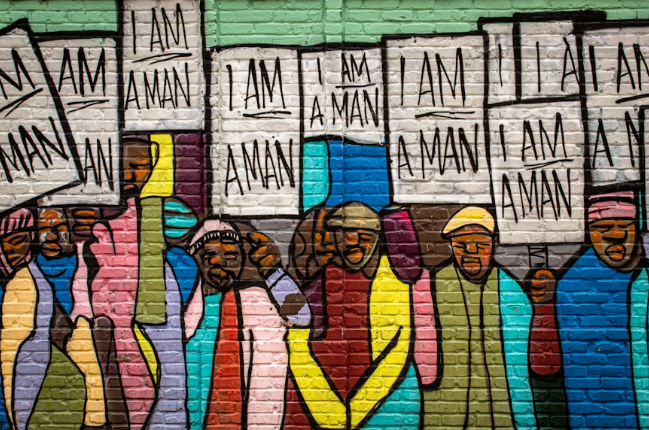
Thanks to these black inventors’ contributions to medicine and technology, we can enjoy more comfortable lives, from the invention of the folding bed to treating cataracts. Black inventors have made history. There are still many African-American inventors who have gone unnoticed or uncredited for their work, and this month, Black History Month, is used as a way to appreciate all their hard work.