









































As students move through high school, they are encouraged to think of the future at each step of the way. Green Hope offers numerous Career and Technical Education (CTE) classes, all of which help students gain real-world skills and earn transferable credits for potential careers. With course registration for the 2026-27 school year approaching, students need to know what to expect from a CTE class.
Green Hope offers certifications in various areas, including office management, graphic design, computer science, business and medicine. Students learn the material of each course throughout both quarters and are assessed either quarterly or at the end of the semester, depending on how many levels of a certification are offered.
Despite the availability of classes that help build workforce readiness, many students may not know what their post-secondary plans are, which is perfectly normal. In that case, it’s recommended to register for a couple of CTE classes that align with one’s desired pathway to prepare students for future opportunities. If a student doesn’t have a desired pathway, taking a CTE class is still an optimal way to learn certain skills that will prove useful later in life, whether that is in the workforce or in one’s personal life.
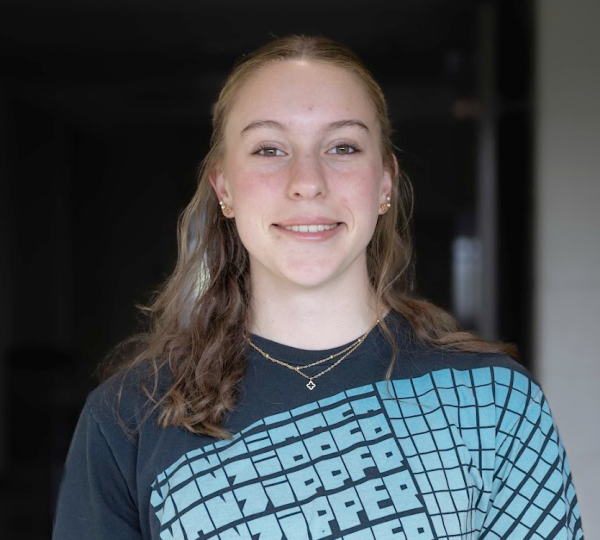
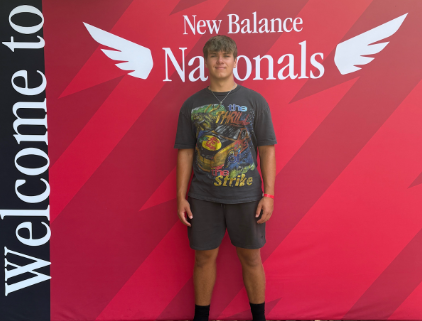
Junior Eden Byrd (‘27) took Microsoft Excel Honors during her freshman year, originally thinking that “it would be beneficial to know how to efficiently navigate an application like Excel, for when I enter the workforce.” Byrd passed both her Core and Expert certifications with perfect scores and the fastest times in North Carolina, making her the State Champion in Excel testing. A prime example of how certification classes can open doors for students, Byrd was invited to Orlando for the national conference for Microsoft Excel following her freshman year at Green Hope.
The conference was essentially a timed competition between students from across the United States, where they took a more advanced version of the Excel certification tests. Byrd expected to find herself among students her age, but was surprised to find that she was one of the youngest ones at the conference. “It was all college kids. The guy testing next to me went to Cornell.” She reflected on her experience as a positive opportunity that was possible through her success in Green Hope’s Excel course.
Byrd hopes to use her knowledge gained from becoming Excel certified to help her be well-versed in technological functions when she enters college and then the workforce. She currently uses her skills to help her family members with planning and financial organization.
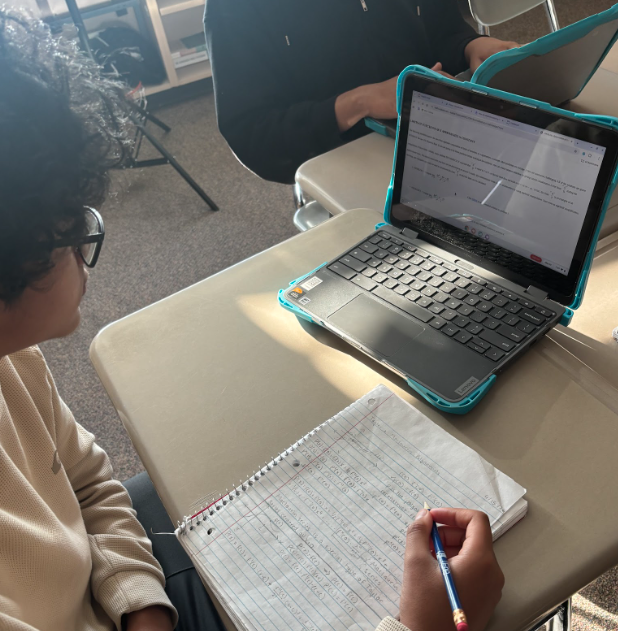
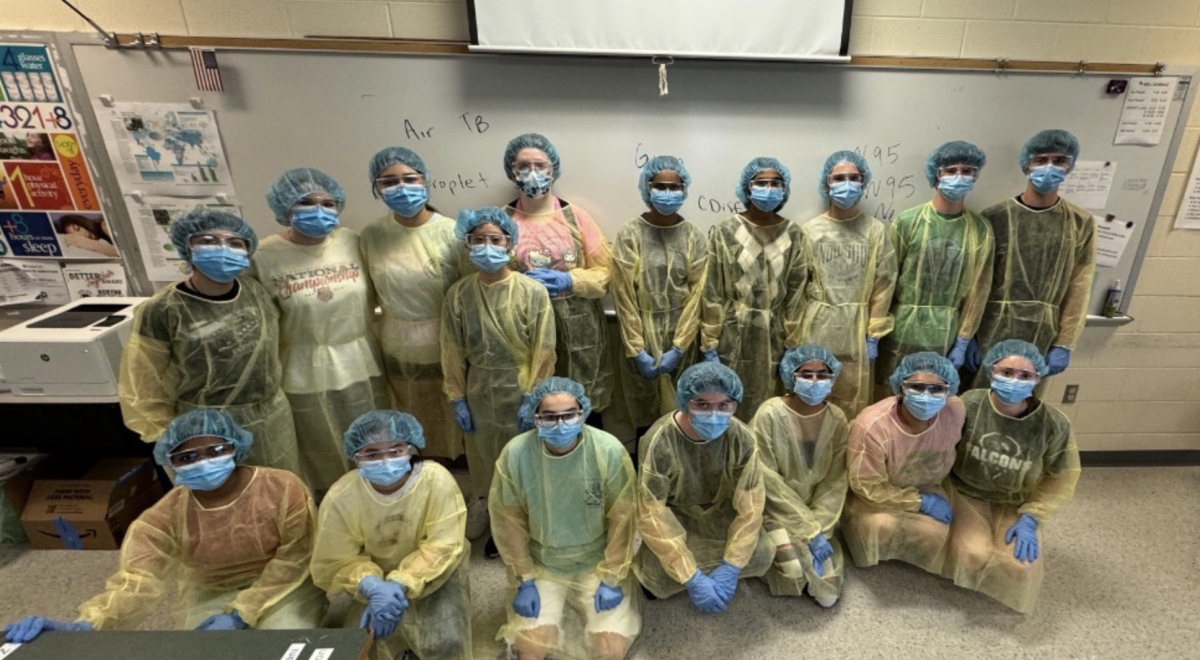
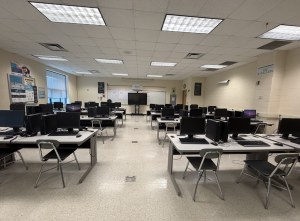
Classes that yield a certification are taught by an experienced Falcon staff of educators, many of whom are certified in their area of expertise. Computer-focused or office-management types of certification classes generally use desktop computers, with almost all of the work being done during school hours using programs like Microsoft Excel or Adobe Cloud. On the other hand, many of the medicinal certifications require hands-on experience and evaluation, which occurs in classes like Health Science I and II.
The certifications below are available through multiple classes offered at Green Hope. Contact your counselor to find out more about signing up!
Adobe Illustrator: The Illustrator program is a digital artistic software that runs under the Adobe Cloud umbrella. To become certified through Green Hope, students must complete the Adobe Visual Design class and pass the certification test through Certiport. The exam includes testing in sections like tools, layers and coloring and yields a certificate that has a three-year renewal period. Illustrator is generally used for graphic design professionals and preceded Canva, pioneering digital graphics. Falcon students who intend to focus on digital media or design are highly encouraged to take Adobe Visual Design.
Adobe InDesign: The InDesign sector of Adobe educates students in the business aspect of a career in design. The certification exam tests knowledge of project design, communication and document structure, allowing certified individuals to build a resume that demonstrates experience in project management in a graphic design format.
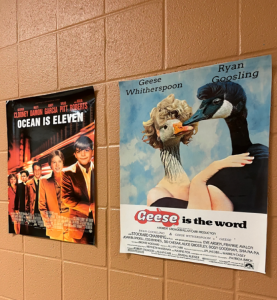
Adobe Photoshop: Photoshop is a photo-editing software that allows users to alter photos in a professional setting, which can be incredibly useful for various career paths. Students in Adobe Visual Design learn how to use Photoshop to become certified through an exam at the end of the course. During the semester, skills like manipulation of backgrounds and human features are covered, along with removing and adding aspects of an environment into a photo.
Adobe Premiere Pro: Students who become certified in Premiere Pro will be evaluated based on their demonstration of video editing skills and film production. This pathway is recommended for students who plan on entering a field that requires skill in digital media, as it teaches users how to effectively create productions that engage audiences and demonstrate confidence in management.
Autodesk Certified User AutoCAD: The Autodesk interface offers a plethora of certifications spanning multiple career fields, but the AutoCAD certification focuses on drafting and modeling for an engineering focus. It’s a computer-focused course that enables students to learn to use 2D and 3D design software in engineering and architectural contexts. The exam is a test of students’ knowledge of architectural concepts and incorporates the ability to attach files and manage content, and it provides a solid foundation for engineering careers.
BLS Provider CPR: BLS Provider CPR is a lesson given to Health Science II students at Green Hope who have successfully passed in-class CPR training on both children and adults. The course teaches essential CPR skills, including how to check a scene for safety, how to locate a pulse point, how to perform CPR on different genders and body types and the correct rhythm to perform CPR before healthcare providers arrive. To complete the certification, participants must complete both mouth-to-mouth and hands-only CPR on children and adults, identifying the differences and when to use each method. The certification is essential for all individuals, but is especially useful for those interested in healthcare.
CompTIA Tech+: CompTIA Tech+ is a certification that confirms basic knowledge of computer science principles for students who intend to have a future career in computer science or a related field. The CompTIA Principles course at Green Hope has students take the certification exam at the end of the semester, and it encourages students to continue to more advanced computer science classes in the future. The exam covers code, infrastructure and applications of computer science topics to everyday technological interactions.
Entrepreneurship & Small Business (ESB): Obtained through a Certiport exam, the ESB certification tests students on knowledge of basic business concepts and entrepreneurial principles, often specific to a certain country. The course focuses on evaluating business opportunities, planning and managing a business, financial management and marketing techniques, allowing participants to understand the basics of running a small business. The Entrepreneurship I and II courses are recommended for students who plan on going into a business field or pioneering their own business so that they can begin to build a foundation for any future business ventures.
First Aid: The First Aid certification at Green Hope is offered through Health Science I, which focuses on the structure and function of various body systems. As for the certification itself, First Aid ensures that participants are able to effectively provide medical help as bystanders before paramedics arrive. The certification involves a simulation where students practice securing the scene, asking if the individual is okay and locating a pulse. This program is beneficial for all students, building their confidence in saving the lives of others.
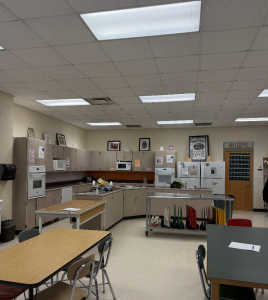
Food Handler Certificate: The Food Handler certification at Green Hope is available to students who take Foods, a class focused on the preparation, cooking, and cleanup of various recipes and dishes. Within the class, students learn how to take food temperatures, recognize the ideal temperatures for various ingredients, how to prevent cross-contamination, how to effectively clean and sanitize surfaces, and how to maintain personal hygiene throughout the cooking and baking process. The certification is generally valid for three years and is granted after the completion of an online test. This course is ideal for students who enjoy baking and cooking in their free time, or are interested in the possibility of culinary school.
IT Specialist – Python: Primarily focused on code, the Python Specialist certification tests users on their ability to read, interpret and write code using Python programming software. It’s a great stepping stone for anyone who wants to focus on computer science or coding in the future, and it allows students to learn a little bit about the language that controls their computers. The certification exam is taken towards the end of the semester, and passing it confirms that students have demonstrated adequate knowledge of basic Python programming concepts.
Microsoft Excel Core: The Core certification testifies that a student has mastered entry-level commands in Excel Spreadsheets, including how to manage worksheets, perform various math functions and commands, create cell tables and ranges and create charts and objects. To earn this certification through Green Hope, a student can take Microsoft Excel (academic or honors) with Ms. Murray or Ms. McGaha. The 50-minute exam is taken after the first quarter of the course, and if a student passes, they are halfway to an Expert certification in Excel.
Microsoft Excel Expert: Excel Expert is an extension of the Core certification, the primary difference being the level of advanced commands demonstrated during the exam. At Green Hope, students take the Expert certification test toward the end of the second quarter of the Microsoft Excel Honors (or Academic) course. Any Excel certification obtained after Sep. 2, 2025, will need to be renewed after a five-year increment.
OSHA 10: OSHA 10 is a certification given to Health Science II students that equips them with fundamental knowledge about workplace safety and their rights within a given employment center. The course focuses on fall protocols, inspector expectations and the handling of various hazards, both general and job-specific. The OSHA card awarded to participants does not expire, and is often required in many job training sessions. The certification is roughly ten hours and ensures participants are able to identify hazards and advocate for their rights while on the clock, making it a great option for all students at Green Hope.
PCEP: The Certified Entry-Level Python Programmer certification is available to Green Hope students who are interested in coding. The course goes through entry-level Python coding fundamentals, equipping the participants with skills needed to further their programming abilities. The course tests common terms and conditions needed, a general understanding of the layout used for Python programming, data collections, numeral systems and various other aspects frequently utilized in the coding world. This certification is ideal for students who are interested in beginning a software development career or are solely interested in learning the basics of programming.
PreProf in Interior Design Fundamentals: The Interior Design Fundamentals certification offered at Green Hope teaches students basic principles of room design, including the ability to use color theory, incorporate an understanding of history into design, use effective communication to showcase design ideas and understand and apply federal and state regulations into design. Alongside aesthetics, students also learn the importance of functionality, ensuring that their creations are both vibrant and easily accessible. This certification is beneficial to students interested in textiles, design and anything artistic, as it develops the skills for many of these fields.
QuickBooks: The QuickBooks certification offered at Green Hope is available to students who participate in Accounting electives. The certification teaches participants how to use the platform at a base level, including how to manage and document transactions, calculate sales and revenue, create invoices, record expenses and purchases and generate reports and analytics. The course is a great option for students interested in financial planning, as well as those interested in a career in accounting, personal finance or business.
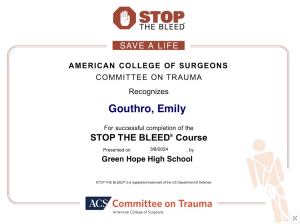
Stop the Bleed: Stop the Bleed is a certification offered to students at Green Hope through Health Science II. The prerequisite for this class is also Health Science I, which goes over various body system structures and functions. Stop the Bleed focuses on preventing severe blood loss at the scene of a graphic, traumatic injury. Students will learn how to apply adequate pressure on open wounds, how to pack wounds with gauze and how to correctly use a tourniquet. The certification is a great option for all students, regardless of whether or not they have a direct interest in healthcare. Being able to assist others before professionals arrive can save a life.
Venture Entrepreneurial Expedition: This certification teaches students who take Entrepreneurship the fundamentals of business, including the financial aspects of beginning a company. In the course, students learn how to develop business plans, marketing, team building/development and market research. At its core, the class assists participants in making confident business decisions while managing their own finances needed to run their business. Students participate in various hands-on activities, as well as simulations, to help them develop a strong entrepreneurial skillset. The class is a strong option for students interested in building financial independence or those who are interested in beginning their own businesses one day.