


























































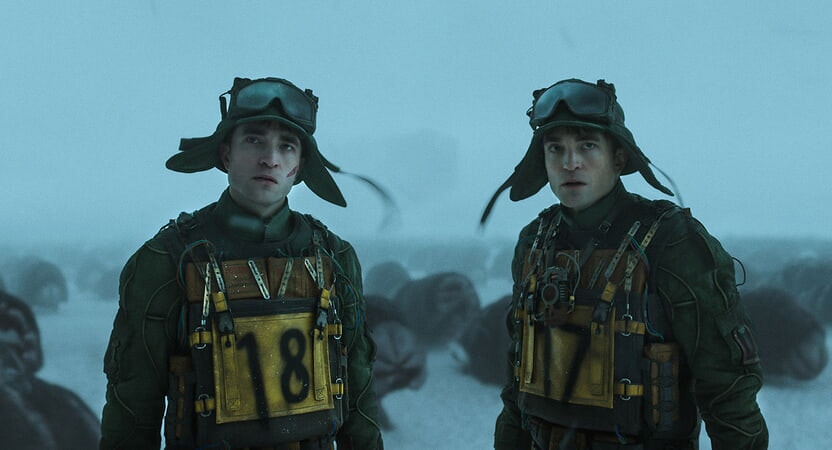


“Nothing is so painful to the human mind as a great and sudden change,” said renowned author Mary Shelley. This is a theme that she focuses on throughout her novel, “Frankenstein.” It’s also a theme that director Guillermo Del Toro explores in his film of the same name, however how the two chose to go about showing and developing this idea is very different.
Influenced by the changing world around her, Shelley created a story about creation, responsibilities and abandonment. “My understanding of the book is that it’s an allegory for the dangers of science and how as a society, or as humans if we feel that we can play God there are unintended consequences,” said Karyn Wilson, a media specialist at Green Hope. In Shelley’s novel, she writes of a scientist named Victor Frankenstein who discovers how to create life, builds a sentient creature from body parts and then abandons it in horror. Leading the creature, who is intelligent and desires connection, to seek revenge on its creator. Some believe this to be the first ever science fiction novel.
Many have tried, and some have failed, to capture the essence of Mary Shelley’s novel. As the years went by people had an idea of the story, of the “monster.” But what many got wrong is that they turned the story into a thriller, modern horror. They pushed gothic horror and sci-fi to the side, and instead relied on gore and jump scares to get their message across, thus losing the point. The original novel wasn’t flashy or superficial, it was dark and philosophical. It made its readers think. There was no villain in Shelley’s story, no monster. Audiences were no longer consuming Shelley’s Frankenstein; they were consuming James Whale’s. Entre Guillermo del Toro.
Toro’s idea to adapt Mary Shelley’s novel came from his lifelong fascination with the book. He saw the story as that of fathers and sons, isolation and the pain of not belonging. He wanted to portray the story not as a pastel-colored period piece, but instead as a gothic tale with 19th century influences. However, “gothic design” doesn’t mean void of color, as the costuming for characters such as Victor is full of color, just not pastel tones.
Toro is a longtime filmmaker and author most known for his work in horror, fiction and fairy tales. His filmography includes movies such as “The Witches” (2020), “Scary Stories to Tell in the Dark” (2019), “The Book of Life” (2014) and “Pan’s Labyrinth” (2006). He has won many awards over the years including three Academy Awards, three British Academy Film Awards (BAFTAs), one Golden Globe and three Ariel awards. He has also written a variety of books such as “The Night Eternal” (2011) and “The Shape of Water” (2018).
Something Toro does well is presenting an older story to a modern audience. He effectively said to audiences “here are very complex characters who all aren’t amazing people.” There is no good versus evil in Del Toro or Shelley’s Frankenstein. There are simply people. People who feel, deeply and profoundly. Toro focuses on themes of generational trauma, forgiveness and the definition of humanity. He reimagines the messages of the original creature by humanizing him. His adaptation argues that the creator, Victor, is the true monster due to his emotional abuse and abandonment, while the Creature, initially innocent, becomes monstrous, only through cruelty, making the audience question what truly defines humanity. “I feel like even though there was this creature and he was obviously doing bad stuff, he isn’t the only villain in the story,” added Wilson. Even though the original novel was written in the 1800s, audiences were able to go to the movies today and enjoy it.
Some could argue that Toro’s interpretation of “Frankenstein” and his vision for the film is a stretch in comparison to previous adaptations. But the difference in perspective isn’t necessarily a bad thing. It’s a timeless idea: people go too far without considering the essence of what they’re doing, and eventually, the mistakes we made in our past haunt us. “Progress is such a core part of human nature, we have always tried to improve things and better ourselves much to the dismay of the world around us,” said Brian Pollard (’26), a senior at Green Hope High School. “We will never stop creating new things.” That is what Toro is exploring in his film, life. He doesn’t rely on flashy jump scares or a looming green figure representing evil to get his message across, because that’s not life, that’s not Shelley’s story.