








































































It’s 1981, and the CDC publishes a report about five previously healthy gay men who have all come down with what seemed like a rare form of pneumonia. By the time the report was published, two of those five men had already passed, with the public already nicknaming the mysterious disease the “gay plague.” At the time of discovery, it seemed to only impact gay men, thus marking the beginning of the 1980s Acquired Immunodeficiency Syndrome (AIDS) crisis.
In modern-day times, people have come to learn that AIDS/HIV can affect anyone; however, during the time of discovery, many gay men were treated as subhuman by the general society. They were treated with immense fear, stigma and discrimination fueled by the misinformation and homophobia that was rampaging. Many men were faced with social exclusion and violence for simply being gay during the “gay plague,” and even interacting with them was thought to be risky.
During this time, there was a lot of community mobilization, advocacy from groups like ‘ACT UP’, and solidarity from other minority groups to bring attention to the neglected health of those with AIDS. Despite all these efforts to bring attention to AIDS, the media barely cooperated with flip-flopping between negativity and just ignoring the issue altogether. Even the president at the time, Ronald Reagan, avoided discussing the issue, which contributed to the lack of a public health response.
The public health response was slow, underfunded and denied. There was also so much medical misinformation that demonized any physical contact with the infected, let alone getting into contact with any bodily fluids from them.
Due to the lack of research, many myths came out about AIDS, with the biggest myth of them all being that it could transfer through everyday contact, such as handshakes and hugs. It wasn’t until Princess Diana of Wales was photographed shaking hands with AIDS patients without gloves that the public began to see how human the people with AIDS were.
Up to that point, AIDS patients were viewed by many as inhuman and disgusting. However, when Princess Diana showed those people love just through a simple handshake or hug, she was showing the world that these were just people who also deserved love like any other person.
The major shift in awareness for AIDS came with the deaths of major celebrities, such as the death of Rock Hudson and Ryan White, who both died of AIDS related causes. Additionally, other celebrities announced their HIV status, such as Magic Johnson, which led to more awareness of the subject that not just gay men were affected by AIDS.
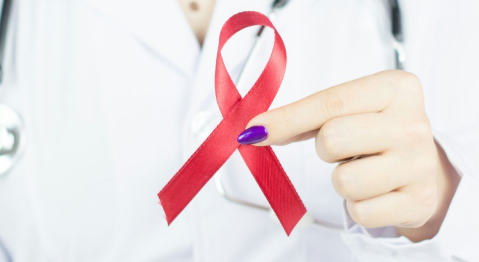
By 1992, AIDS had become the leading cause of death for 25-44 year old men in the United States, and there were more AIDS cases among women and through heterosexual transmission. As the disease kept spreading to more and more of the affected. Around this time, the red ribbon emerged as the symbol for AIDS awareness.
After 1992, more support and medical care emerged to help people affected by AIDS. The arrival of Highly Active Antiretroviral Therapy (HAART) brought hope to those with AIDS, turning the disease that felt more like a death sentence into something that could be lived with in more well-off countries. However, the death tolls still stayed untouched with remarkably high death rates from AIDS.
During this time, the CDC began to recognize that women and drug users were also affected, which ultimately led to more vaccines and better treatments, whilst also combating growing drug resistance. Then, in 1993, President Clinton established the White House Office of National AIDS Policy (ONAP) and the NIH Revitalization Act, expanding research involvement for women and minorities in the search for AIDS treatment.
Today, the AIDS epidemic is still ongoing, but has since transformed from what it once was. While there is still no cure for AIDS, there are currently medicines that make the disease more manageable. The number of new infections is declining, and with it, the number of AIDS-related deaths.
There is still much to learn about AIDS, such as how it affects people and how we prevent it. When asked how AIDS affects the human body, Green Hope High School nurse Ms. Bowes said, “When somebody has been living with untreated HIV, then it becomes AIDS, and then their systems can’t fight off anything. So there are a lot of symptoms and diseases and things that come into that because their body cannot fight it off. But luckily now, with all the anti-viral treatments, many people don’t reach that stage.”
Ms. Bowes then discussed how HIV can be transmitted. “They can be in a latent phase where they get HIV through unprotected sex, blood transmission, sharing needles, any sort of contact with blood and even a mom can pass it on. A mother can pass it on if she is untreated and doesn’t realize that she has it,” she stated, “Then someone with HIV can now take some anti-viral medication. But if they don’t do that, then their body takes a beating, and that can happen for eight to ten years if left untreated.”
Finally, Ms. Bowes described the transition to AIDS, which leads to a much weaker immune system that makes even the smallest cold potentially deadly. “At the point when they get AIDS, their immune system is devastated, and that’s when they get all these secondary diseases that they can’t fight like pneumonia.”
Today, scientists have seen great improvement with our medicine, enough improvement to help the immune system fight off other diseases, whilst also juggling HIV/AIDS. Despite all the positives with the modern-day treatment of AIDS, there have also been downsides. Millions of people everywhere still lack access to prevention, testing and treatments for AIDS. With the United States’ funding cuts, a resurgence in the future is possible. However, with enough medical advancement and support worldwide, the human race will prevail and get stronger altogether. HIV doesn’t make someone any less human, and no one should be isolated or judged just because of an illness.