

































































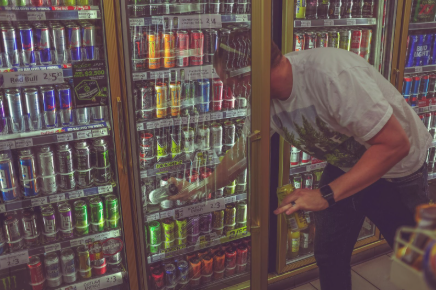
Have the harmful effects of energy drinks been overlooked because of their flashy branding and fun flavors? Energy drinks are everywhere from late night studies to a mid day boost, but many do not realize the risk that these small cans hold. Most energy drinks contain an artificial sweetener, a source of caffeine, various vitamins and taurine. The combination of these ingredients create a buzz that is often marketed towards athletes and students, advertising as a tool to increase metabolism and sharpen focus. Many blindly trust and consume these energy drinks to revive themselves.
These energy drinks do not come without their disadvantages, however. Behind the fruity flavors lay both short term and long term effects. Though often marketed as a drink for athletes, energy drinks do not replenish electrolytes lost while exercising, rather they only temporarily give the body an artificial boost that leaves soon after. The consumption of energy drinks has proven to become addictive, harm the heart, decay teeth, increase weight gain and risk blood clots and high blood pressure. These possible harms have the potential to last a lifetime, and for that reason, energy drinks have been banned in many countries worldwide. In countries where they are not banned, a suggested 18 plus label is on the drinks.
The consumption of these drinks has also resulted in cardiac related deaths. In 2013, a 28 year old male who drank generic energy drinks everyday for seven months straight and then drank three energy drinks a few hours before a basketball game died from cardiac arrest. Similarly, In 2012, a 22 year old female drank six energy drinks within four hours, causing her heart to develop long QT syndrome (a disorder of the heart rhythm) and necessitate resuscitation. The CDC found that, “In 2011, 1,499 adolescents aged 12–17 years went to the emergency room for an energy-drink–related emergency.” Though many of these cases are on young people, people of all ages are liable to suffer the effects of energy drinks.
The issue of energy drinks is also present at Green Hope. In a poll of 50 Green Hope students, the GH Falcon asked: how often do you drink energy drinks and do you believe energy drinks are harmful? The results for the first question showed that 45.1% of students did not drink energy drinks. Conversely, 15.7% of students said they drink one every day, 17.6% said they consumed one energy drink per week, 5.9% said they had one every month and 15.7% said they drank one every few months. When asked the second question about the harm of consuming energy drinks, 66.7% of students believed they were harmful, and 33.3% believed that they weren’t. These statistics show that the larger portion of Green Hope students recognize the harm of energy drinks and a portion refrains from consuming them. But there is also a portion of students who drink the beverages almost daily without considering the harm.
On the topic of energy drinks consumption at Green Hope, Nadia Pawlak (‘28) says, “I drink energy drinks because I like the boost it gives me and the flavors they have.” On the topic of risks she said, “I know of the risks of heart issues and possible addiction.” The poll taken shows that there is an increasing amount of people aware of the possible effects, but it also shows there are many who overlook the harms and continue to consume energy drinks. Energy drinks remain a part of Green Hope student’s life’s, so understanding the side effects of the drinks is an important step to take.
Energy drinks, though popular and marketed as beneficial, possess hidden effects that consumers need to be wary of. Bright packaging and fruity flavors hide possibilities of life altering ailments such as heart issues, addiction or even death. Students often consume energy drinks because of the boost they provide throughout a full school day packed with an early wake up and hours of work, but what many do not realize is that energy drinks impact their bodies and may eventually result in a crash. Students should consider healthier energy alternatives to give them a boost, such as matcha or other teas. Energy drink consumption is a dangerous gamble for one’s developing body.