


















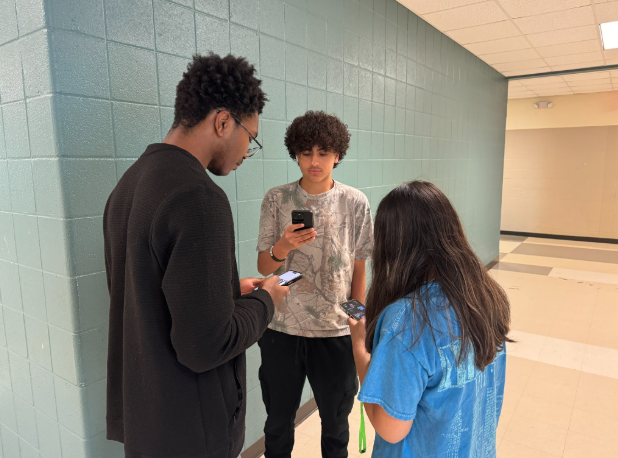








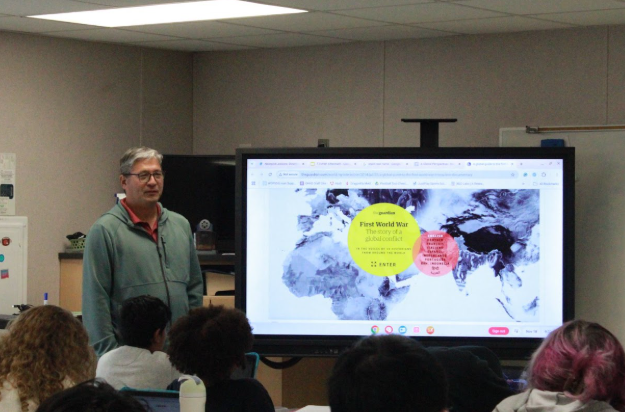









































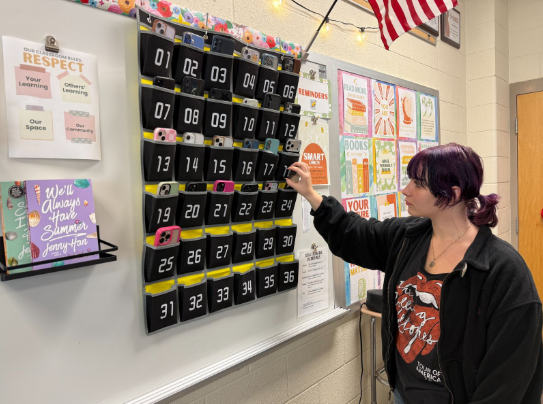
Burner phones, calculators and 3-D printed devices are some of the measures students take to avoid losing access to their cell phones under Green Hope High School’s cell phone policy, where students place their phones inside a phone caddy; however, starting on Monday, Nov. 17, Green Hope is implementing a new cell phone practice to comply with North Carolina law and Wake County Public Schools directive. The new policy includes provisions that deal with the confiscation of phones, off-campus lunch passes and parking passes.
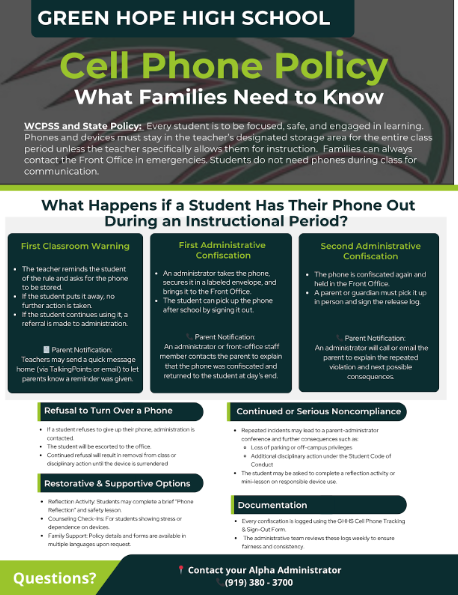
The cell phone policy is split into three levels, and it still revolves around the use of the phone caddy; however, the policy provides additional enforcement to the use of the phone caddy. The first level is “classroom warning.” A similar provision exists under the old policy, where if a student does not place their phone in the caddy, a warning is issued by the teacher towards the student. If the student still does not place his or her phone in the caddy, parents are contacted.
Continued non-compliance with placing the cell phone in the caddy leads to an administrative confiscation of the device. Mr. Bollhoefer, one of Green Hope High School’s administrators, explains, “We will come [to the classroom] and we have determined that instead of just taking the phone, we will put it in a manila envelope in front of the student, put their name on it and then we bring it back down [to the front office] and we actually have a system where we’re storing them.” The student, at the end of the day, comes and picks up the phone from the front office. If administrators confiscate the phone a second time, parents, instead of the students, pick up the phone at the end of the day.
For some students, the old cell phone policy was working. Gracen Vuytecki (‘27), observed that the old policy has “been working. Usually, what my teachers do is they make sure all the students put their phones up,
and then the ones that don’t put their phones up are marked absent.” Vuytecki feels that “confiscating phones is a pretty good idea.”
Mr. Bollhoefer defended the system of administrators confiscating phones as opposed to teachers because the school’s administration “doesn’t want to put teachers in a position” to take students’ phones, and “our role is to enforce policy more than anything.” Many students feel cell phones are their property and there is no right for school administrators to confiscate the devices, but Mr. Bollhoefer attested that Wake County personnel hold no liability, “for electronic devices that are on campus.”
As a result of the policy and its implementation, Mr. Bollhoefer feels, “It’s going to be a better outcome for cell phone addiction, and I think it can make kids feel more connected to their peers because when it’s not looking at phones anymore, now, I have to face you and now there’s more likely to be engagement between students.” Thus, the policy aims to restore collaboration in the classroom and communication among students in common places such as the cafeteria.
The cell phone policy’s provisions extend beyond administrative confiscation, too. Continued violation of the policy can result in the revocation of off-campus lunch and parking passes, along with additional disciplinary provisions in the student code of conduct. For restorative measures, students are expected to complete a reflection activity on their cell phone usage, and student services may be requested to work with students to curb their addiction.