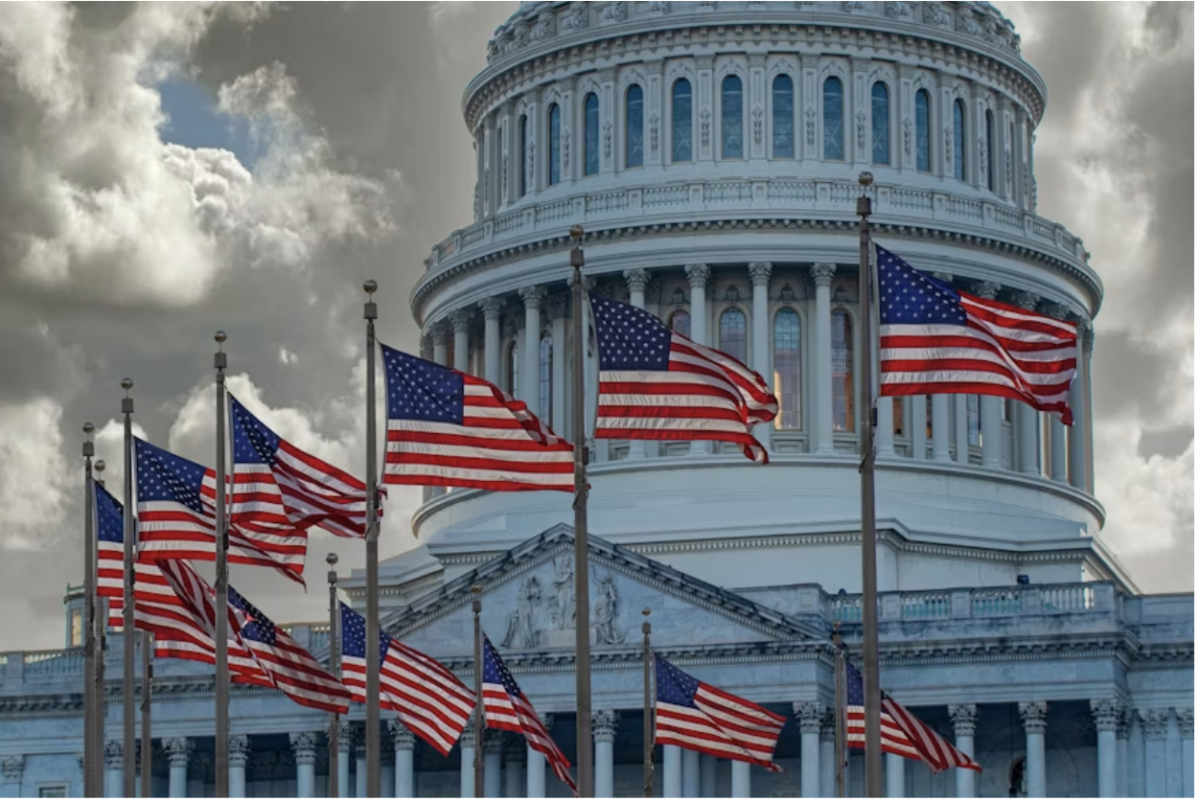































































In 2015, a United States Supreme Court majority vote cemented same-sex marriage as a constitutional right, a monumental step in the acceptance of and support for the LGBTQ+ community. Prior to the Obergefell v. Hodges case, certain states would only legalize a marriage license for heterosexual couples. Ten years ago, court official Kim Davis was charged $100,000 for her refusal to issue marriage licenses to gay couples following same-sex marriage becoming a constitutional right.
Recently, Davis went to court to dispute her former charges, arguing that issuing marriage licenses to such couples contradicted her religion and therefore violated her First Amendment rights. However, the current Supreme Court refused to hear her case, issuing a statement saying that in her job as a legal official, personal religious beliefs are not grounds for refusal of service. It was ultimately ruled that Davis must still pay her six-figure damages, protecting gay marriage as a constitutional right.
Despite the court’s denial of overturning the precedent, the resurgence in discussions of gay marriage rights has sparked many debates across the country. Some individuals who support the right voiced concerns about the political makeup of the court had they agreed to hear this case. One third of the judges are appointees of conservative President Trump, who is outwardly against protections for the LGBTQ community. These judges have influenced a few major decisions regarding marginalized communities during their time on the stand, including the overturning of Roe v. Wade (1973) in 2022, rescinding the previous permission of abortion as a constitutional right for women.

This brings up another concern about Obergefell v. Hodges: what’s the difference between hearing a case about marriage versus hearing a case about abortion? In the words of a lawyer: “Marriage was described as a ‘fundamental right’ and there was no notion that anyone had a ‘competing interest’ that was being harmed by virtue of someone’s decision to marry.” The most influential aspect of the differences between these types of cases is the fact that abortion, unlike marriage, is a right of the body and of life and death, making it more heavily scrutinized in court. On the other hand, marriage is a legal union between two people and not a matter of endangering life. Therefore, marriage is viewed as less of a concern and, according to certain legal professionals, has fewer grounds to be disputed.
As of Nov. 10, the incorporation of the right to same-sex marriage was upheld through the Supreme Court’s refusal to hear Davis’ petition. However, there could have been significant impacts throughout the country had the right been revoked. For example, prior to the Obergefell decision in 2015, 29 states–North Carolina included–had provisions in their own constitutions that forbade same-sex marriage. If the Supreme Court decided to hear and uphold Davis’ argument, various states may have returned to previous policies that disallowed marriage if it was not of a heterosexual nature.
Jennifer Alesio, a high-level lawyer who primarily works in California, is a member of the LGBTQ+ community and has numerous personal connections to the topic. As someone who is well-versed in legal matters, she offered some pointed insights on the court’s shutting down Davis’ concerns about Obergefell. When discussing the legal actions taken by the court in previous years to recognize gay marriage as a constitutional right, Alesio noted that the decision was a sensible one for the court to make. “It was plainly a legally correct decision based on the precedent; getting around the rulings in Loving v. Virginia (recognizing a right to interracial marriage) would have been a difficult task for the Court, but there were plenty of folks in the movement who were extremely anxious when the Court took the case.”
An important fact to note is that the pure legality of existing as a homosexual individual in America was not recognized until 2003 in the case of Lawrence v. Texas. Since then, gay marriage and acceptance of the gay community have only increased, as recognized by Alesio. “Gay marriage is more normalized in a thousand important ways.” In the United States, 119,000 married LGBTQ couples currently have children, whether they be biological, adopted or anything else. These parents are an important percentage of households for children to be raised in, and a decision overturning their right to be legally united could wreak havoc on the familial aspirations of millions of queer Americans. In Alesio’s case, the murmurs of the constitutionality of rights concerning “non-traditional” marriage caused some unrest in her sense of security in her family’s safety. “I called my family law attorney to consult her on what legal protections we needed to put in place with respect to our family that were presently based on or through our marriage rights.”

The prospect of Davis’ petition succeeding worried many LGBTQ Americans at the thought of losing what should be such a given right. “I remember at the time that just getting married, and having a pretty standard, almost traditional in some ways, wedding felt like a very political act,” recalled Alesio about her and her wife’s marriage in 2011. The uncertainty of what may have happened had the court overturned Obergefell has been influential in recent social discussions concerning the rights of minority groups.
In refusing to hear the case, the court reinstated a feeling of security for millions of Americans and ensured that marriage is an equal right. People like Alesio hope that this case can be a stepping stone towards more acceptance of LGBTQ individuals, especially in government policies. “Even with the right to marriage temporarily preserved by the Court declining to consider Davis, I still don’t carry a great deal of confidence that this is the last of the attacks on the issue.” With so much political turmoil circulating, including the recent government shutdown’s end, the court can turn its focus on issues of greater gravity by turning down Davis’ appeal.
As the LGBTQ community and its allies feel a sense of relief at the news of the refusal of the case, many hope for a spirit of inclusion and acceptance to continue to be fostered towards all minorities in America, including but not limited to same-sex couples. The importance of this case lies not in the legal reasoning, but in the notion that to challenge the right to marry is to challenge a right that should be extended to anyone who wants to take advantage of it, and the fact that that right should not be restricted based on sexuality or any other distinguishing aspect of a person’s life.