
















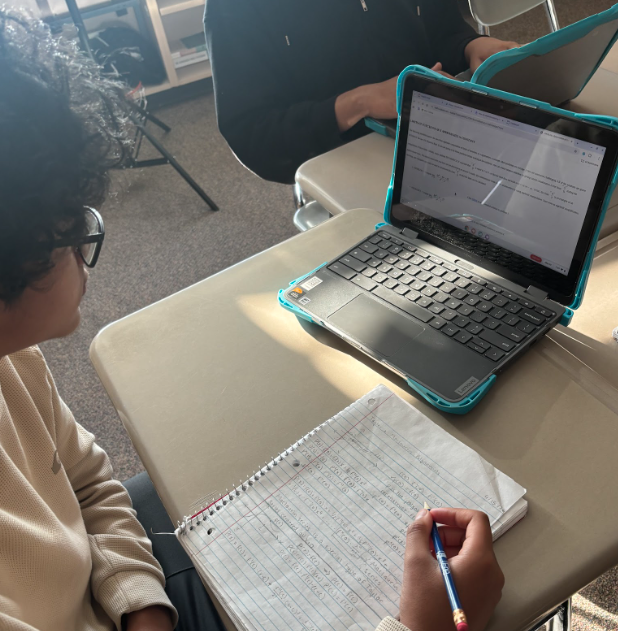












































While Artificial Intelligence (AI) can be helpful in education, many students are starting to depend on it instead of using it as a support tool. Rather than working through questions on their own, students can type a prompt into an AI program and quickly get an answer that once would have taken research and careful thinking. Because of this, assignments that were meant to develop critical thinking and problem-solving skills can sometimes be completed with very little effort. Still, when students use AI the right way, it can be a useful resource for studying, understanding difficult topics, and improving learning overall.
AI has changed everyday life in many ways, and its impact on schools comes with both pros and cons. An article from the College of Education at Illinois discusses both sides of using AI in education. In the section about benefits, the article explains that AI can be used to personalize learning and create more inclusive learning for all students. However, the article also points out several concerns of AI in education, including privacy and security concerns, and reducing teacher-student interaction. Overall, the article’s message represented the nuance of AI use by presenting both advantages and disadvantages of AI in schools.
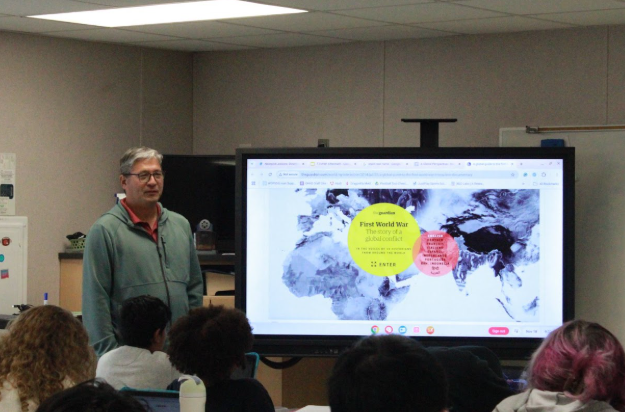
Green Hope High School freshman John Cargo (‘29) recently shared his opinion on AI in schools and explained how it has improved learning and studying. He said, “Usually when the teacher explains something, and I don’t understand, AI always helps me understand.” He also described how he uses AI at home to study and review, saying that “AI is a lifesaver the day before a test.” While studying for AP World History, he used AI to review material and practice free-response questions because it provided quick feedback and helpful explanations. According to Cargo, the ability to generate practice questions and receive instant feedback makes studying much easier and more effective. He suggested that without AI, students would have to spend much more time searching through textbooks whenever they are confused.
Another freshman at Green Hope High School, Logan Watts (‘29), shared a slightly different perspective about AI in school. In a recent interview, he explained that “using AI for a school assignment is just a shortcut,” because students still have to study the material on their own in the end. Watts believes assignments are meant to help students learn, so students should complete them by themselves instead of relying on AI to do the work for them. However, he still sees the value in AI as a study method, saying that “if you’re reviewing topics for a test, AI is a great tool.”
Although AI is not perfect and can sometimes be problematic in education, many students believe it still has an overall positive impact on schools by making studying, reviewing and understanding difficult topics easier and more accessible. AI allows students to get help quickly when they are confused and gives them more opportunities to practice and review material outside of the classroom. At the same time, students like Watts believe it is important to use AI responsibly so that it supports learning instead of replacing it. As AI continues to become more common in schools, students and teachers will continue finding new ways to incorporate technology into learning.