
















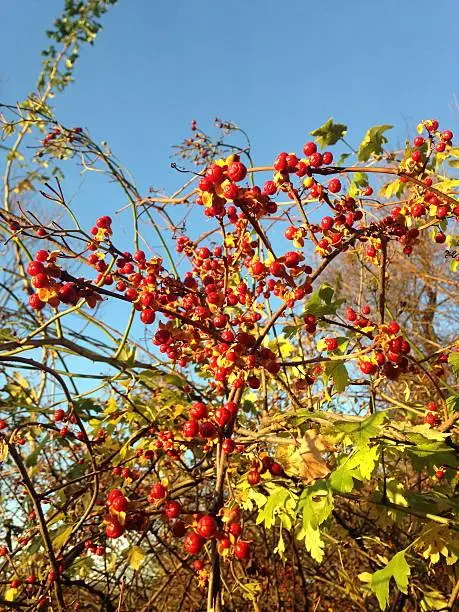






















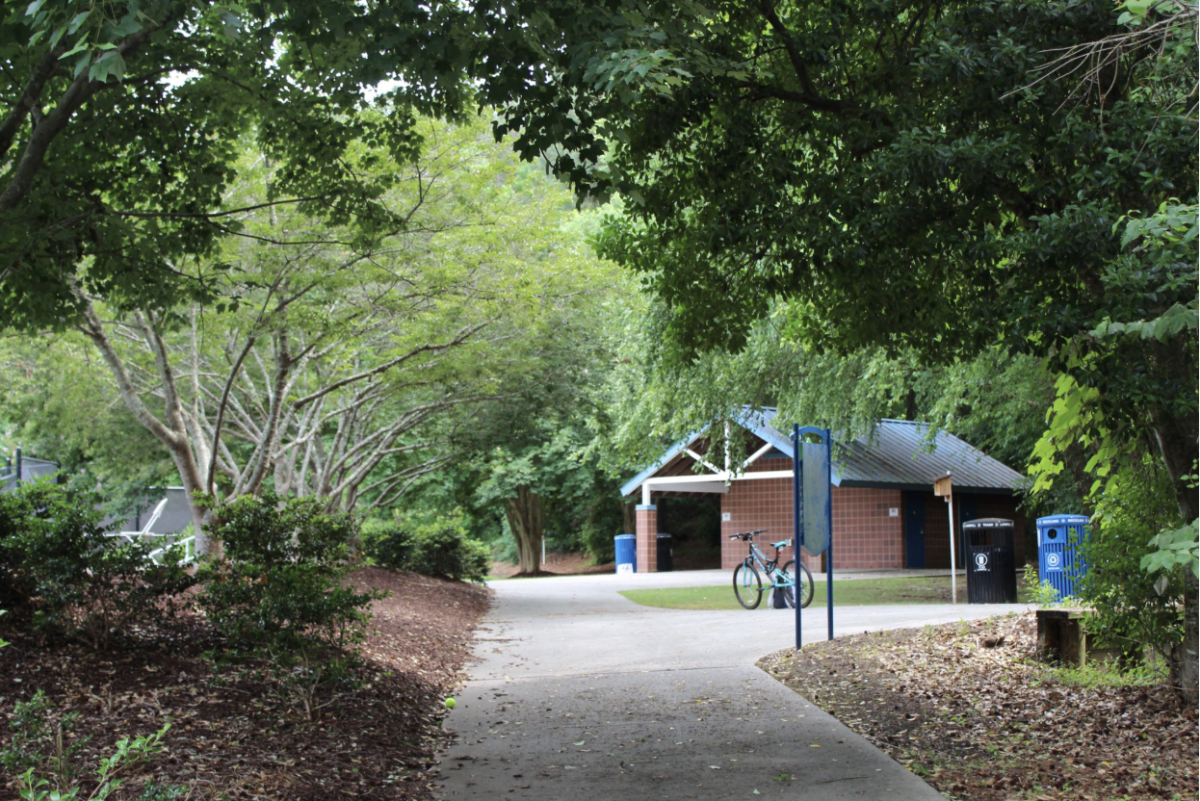
































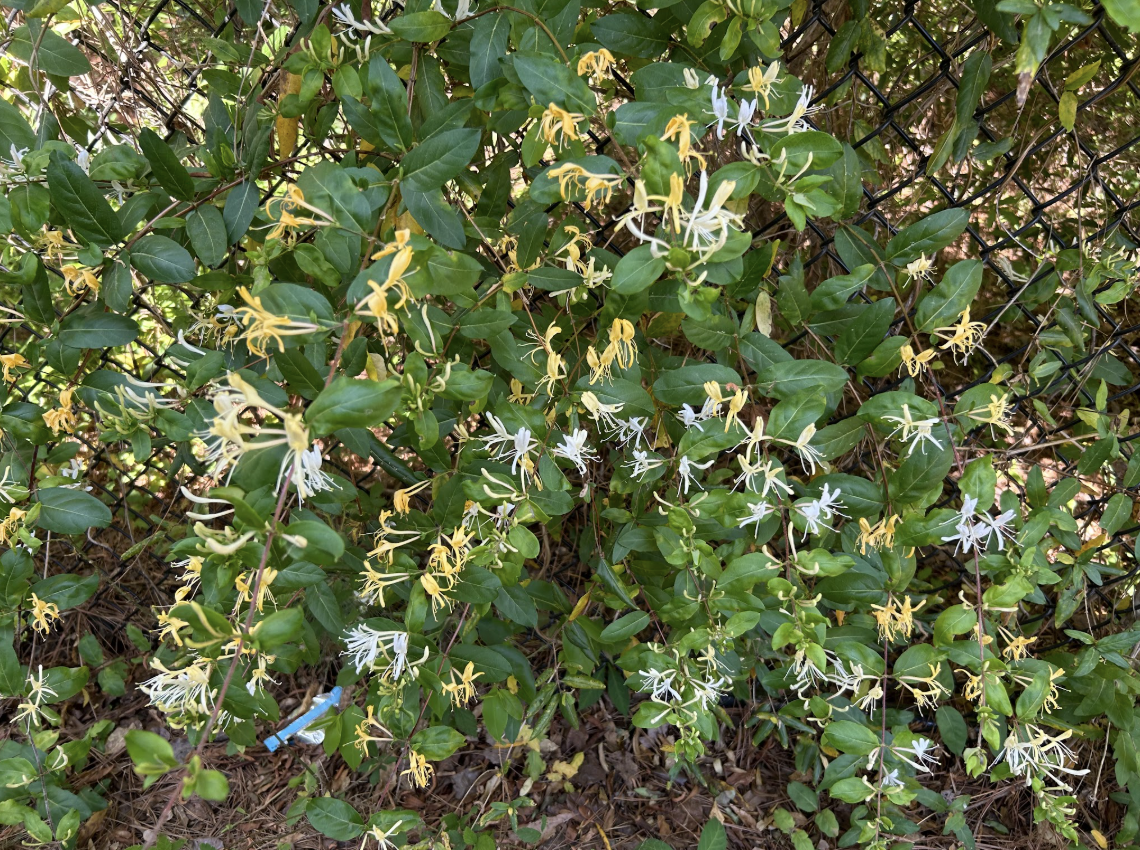
If one wanders around the back of the modules or the pathways to the Green Hope tennis courts, they may find themselves shrouded by a scent of fresh nectar and vanilla-like fragrances. Look around, and the scent-producing plant can be found peaking out from the bushes. It is what’s described as “Nature’s honey in a plant”, the edible Honeysuckle flower.
Honeysuckle Backstory
Coming from the genus Lonicera of the Caprifoliaceae family, Honeysuckles are arching shrubs that originated throughout Eurasia, in areas like China, Türkiye and Southern Russia. These flowers were later brought to the U.S. in the mid-19th century by horticulturists from different countries for erosion control and wildlife cover. Eventually, the species became invasive, destroying native vegetation by creating thick zones difficult for other species to thrive. As of now, the plant is considered an invasive species in North America, and due to certain state restrictions, are banned from transportation and production.
Growth, care and facts
Normally, the flowers bloom from mid-spring to mid-summer, starting from April to July. This is due to increased sunlight exposure, which helps them to grow efficiently. Keeping the plants in lots of sunlight and rich soil keeps them healthy enough to be edible. The scent of these flowers is recounted to smell similar to jasmine or honey, something that contributes to their symbolism. Kateryna Makarenko (‘28), a Sophomore at GH stated that “I can smell them from very far away once they’re near. They have a refreshing smell to them.” Honeysuckle symbolism has been associated with happiness, affection and devoted love, largely due to its fragrance being known for “clinging” or “lingering” around.
Honeysuckles in Green Hope
Honeysuckles can be found all over the school’s campus. Their bushes are located near the fences of Module three, and the pathway to the track and tennis courts. Around GH students, the flower is famously known for being safe to eat and having a “sweet” flavor. Makarenko (‘28) later added, “Yeah, I’ve definitely tried them before. They’re really good and taste super sweet.”
Their representation of love and loyalty matches the spirit of Green Hope students, sticking together and creating long-lasting bonds all around the school.