









































































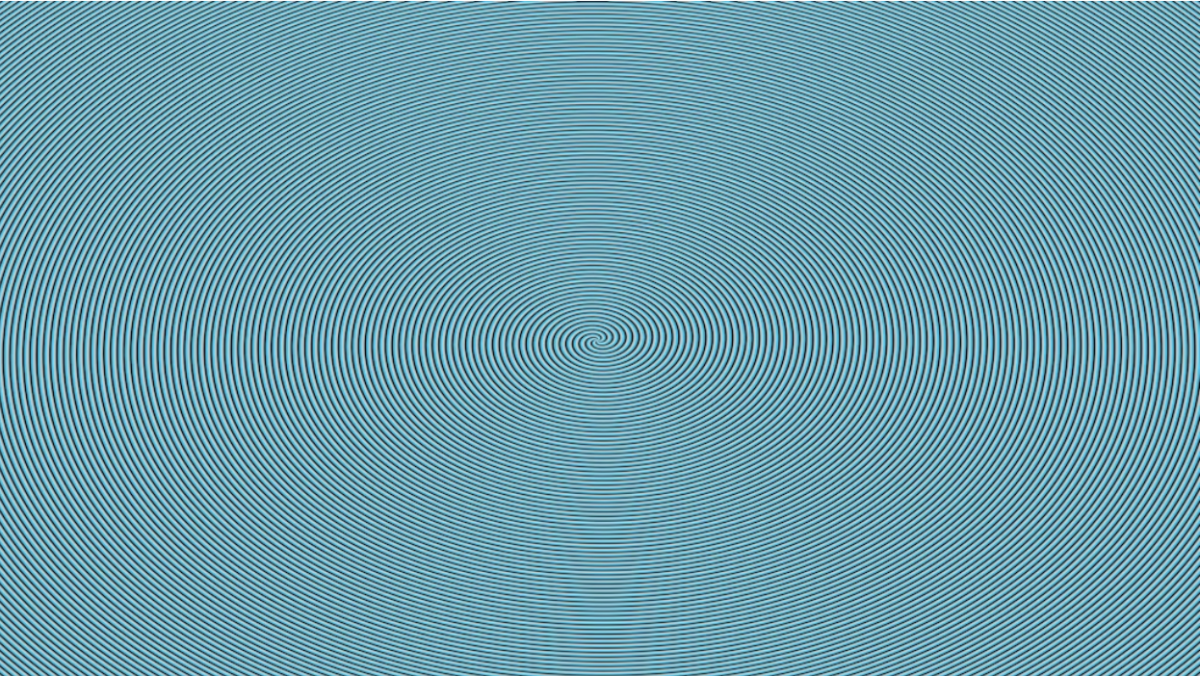
Your eyes tend to lie to you whenever they get confused. What you see may not even exist when your brain is tricking you. You might encounter a twisting spiral, a moving image, or even hidden objects that aren’t as they seem. Optical illusions aren’t just tricks for fun, they reveal the strange way your brain interprets the world. Every illusion exposes a glitch in your perception, showing that what you see is not always reality. Your mind makes guesses to fill in gaps and sometimes just gets it completely wrong.
The Dean McGee Eye Institute wrote in their article, “How Does an Optical Illusion Work?,” “Light from our surroundings enters our eyes, activating cells in the retina (the back of the eye), which sends electrical signals along the optic nerve to the brain where an image is perceived. Normally the brain performs this job seamlessly, instantly providing us with accurate images of the world.” The trick with optical illusions is that they have “lights, patterns, borders or areas of contrast that mislead the brain”. This makes a difference between what your brain thinks you see and what you actually see.
Psychology Today wrote in an article, “How Optical Illusions Work,” “How optical illusions work has been long-debated among scientists and philosophers.” The debate is about whether these illusions come from the neural processing via the eye or involve higher cognitive processes such as prior knowledge. The article highlights that “new research has found many visual illusions are caused by limits in how our eyes and visual neurons work” or “involve higher-level mental processes, such as context and prior knowledge.”
All About Vision wrote in their article about optical illusions, “Because the world is in three dimensions, and an optical illusion is usually only in two dimensions, the brain is tricked by the signals the eyes send.” This brings a new perspective because most optical illusions are drawn to look three-dimensional. The article presents many theories such as “rapid eye movements between fixation points — called saccades — can sometimes trick the brain into falsely perceiving movement,” “your brain constantly tries to make connections and predictions. Although this is extremely useful for survival, misinterpretations can result,” and that “visual pathways are overloaded by information from an illusion, confusing your brain.” The brain has evolved to make predictions and fill in missing information, which helps humans thrive in unpredictable environments.
Optical illusions can come through other senses, not only through pictures. One example is the Aristotle illusion where you cross two fingers and touch a small object like a pen, making one object feel like two. There are three types of illusions, Literal Illusions, Physiological Illusions, and Cognitive Illusions. Once the brain understands the trick behind the illusion, it’s difficult to get tricked by it again.