






















































The “Fall” of Alabama Football
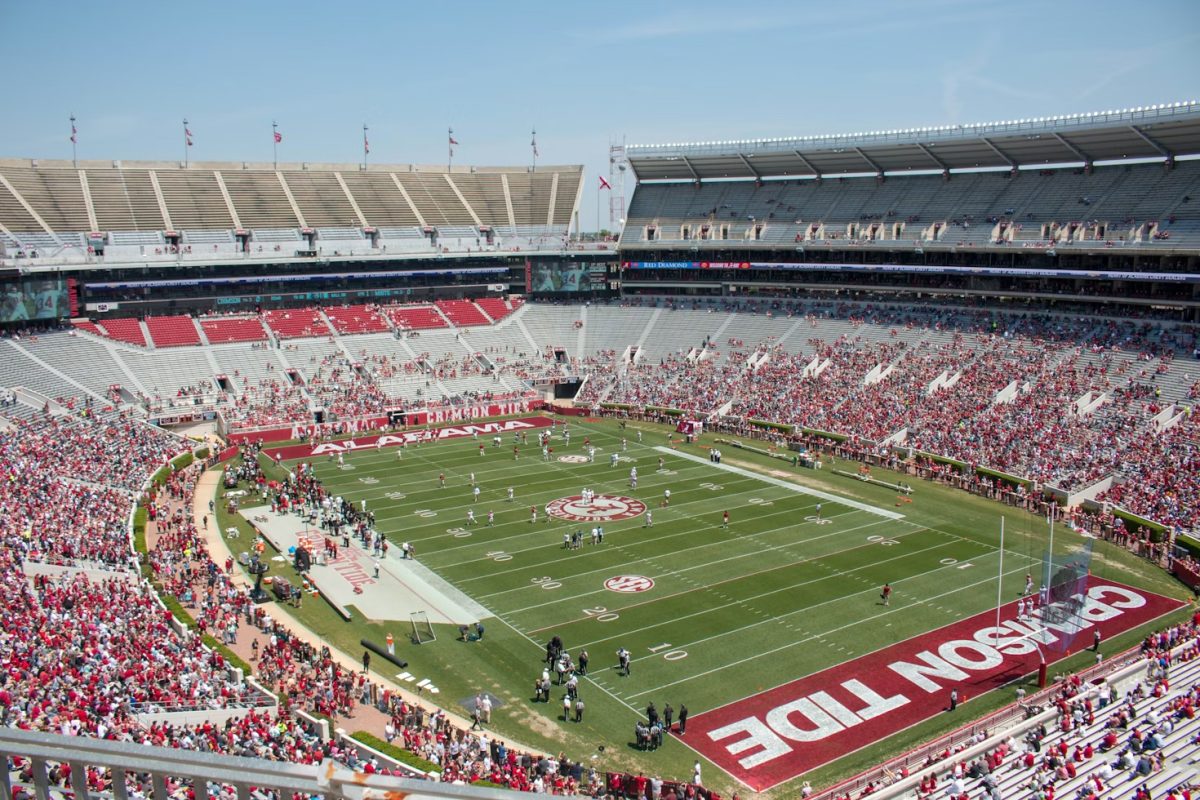
For nearly two decades, Alabama football was not just dominant, it was the standard. Under head coach Nick Saban, the Crimson Tide built one of the greatest dynasties in the history of college sports. National titles, first-round draft picks, suffocating defenses and clinical efficiency. But dynasties don’t last forever. The “fall” of Alabama football, whether temporary or lasting, reflects not just internal change, but a shift in the structure of college football itself.
The Saban standard
When Nick Saban arrived in Tuscaloosa in 2007, Alabama was a proud program searching for stability. Within three years, the Tide had won a national championship. By the time his run peaked, Alabama had claimed six national championships (2009, 2011, 2012, 2015, 2017, 2020), dominated the Southeastern Conference (SEC) and sent waves of talent to the NFL. Saban built Alabama’s identity on elite recruiting classes year after year, a dominant defensive line, and disciplined play.
The Cracks in the Foundation
Even before Saban’s retirement in early 2024, shifts were visible. There was increased parity; teams like Georgia and LSU began matching Alabama’s recruiting and physicality. Georgia, in particular, hired Kirby Smart, who was Alabama’s defensive coordinator from 2008-2015. Smart mirrored Alabama’s blueprint with an elite defense, elite recruiting and NFL pipeline, which led them to win back-to-back national championships in 2021 and 2022. Another reason was the quarterback evolution. Alabama developed late in the dynasty into an explosive offense in the air. They produced stars like Tua Tagovailoa and Bryce Young. But the broader college landscape shifted to an explosive game. Lastly, the introduction of NIL deals and the transfer portal fundamentally changed the roster construction. Alabama, once able to stockpile five-star talent and develop patiently, now faces increased player movement and bidding competition.
The Post Saban question
Saban’s retirement marked the symbolic end of an era. Replacing a coach widely considered the greatest in college football history is not just difficult, it is existential. Alabama’s next challenges are maintaining recruiting dominance without Saban’s presence and adjusting to building rosters using NIL, since that is a major part of college football.
Is it Really a “Fall”
Calling it a “Fall” may be premature. Alabama remains one of the most resourced, tradition-rich programs in college football. The facilities, recruiting network and brand power are still elite. For over a decade, Alabama’s dominance felt structural. Now it feels competitive. The Crimson Tide is no longer the immovable object: they are one contender among several. And in today’s college football, shaped by NIL, transfers and expanded playoffs, that may be the new normal.
The Bigger picture
Alabama’s decline is less about failure and more about evolution. Dynasties depend on control of talent, development, culture and stability. Modern college football reduces that control. The fall of Alabama football is not just the end of a dynasty; it’s the end of an era where one program could dominate without interruption. The question now isn’t whether Alabama can return to the mountaintop. It’s whether any program will ever be the way they once were.
Conclusion
In the end, the story of the Alabama Crimson Tide dynasty is not simply about a fall, but a transformation. Under Nick Saban, Alabama set a standard of excellence that reshaped college football, proving that sustained dominance was possible through discipline, recruiting and cultural consistency. Alabama’s dynasty may have ended, but its impact remains embedded in the sport, and its future will not depend on recreating that past, but on adapting and evolving the game it once ruled.