










































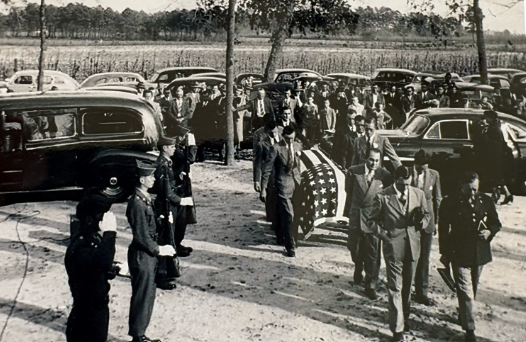



















As of today, there are many debates about how AI will affect the future, positively or negatively. The Industrial Revolution happened in the 1760s and is similar to the AI revolution society is currently undergoing. When the Industrial Revolution was happening, there were initial cons, such as low wages and an increase in wealth inequality, but in the long run, it had a positive outcome and shaped society into what it is today.
Imaginingthedigitalfuture.org found that there are five themes that experts predict. Four of the themes state that AI will make society enfeebled and will make people rethink what it means to be human. On the other hand, the fifth theme talks about the benefits of AI. The idea of the theme is that by 2040, AI should be diffusing through society and will be benefiting humanity in many aspects, such as education, business, research and medicine/health. An AI implication expert, Stephan Abram, wrote, “The best consequence of AI … is that it should inspire a deeper discussion of what it means to be human. The great works of philosophy, sociology, ethnography, psychology, etc., need to be brought to the forefront of the AI discussion. … By 2040, the world should have engaged in a rigorous discussion and developed a framework for AI guardrails and principles.” The fifth theme not only shows predictions that AI will help society in many fields, but also brings greater discussions on social ideas, and people will define what it means to be human.
AI does have a good chance of making unemployment rates go up due to the undeniable fact that some jobs will be done way more efficiently with AI. Goldman Sachs Research estimates 6-7 percent of the US workforce to be displaced if AI is widely adopted. Joseph Briggs, who co-leads the Global Economics team in Goldman Sachs Research, and economist Sarah Dong wrote in a report. “While these trends could broaden as adoption increases, we remain skeptical that AI will lead to large employment reductions over the next decade.” Goldman Sachs Research also includes the point that AI has already caused job losses. Commentary by some public companies already suggests that the labor markets are already experiencing effects because of AI. Currently, AI is slowing down hiring, especially in operational and back-office capacities. Employment growth in marketing consulting, graphic design and office administration has fallen below trend because of AI efficiency gains.
Back to the comparison with the past, during the Industrial Revolution, a lot of positive effects happened, such as the Green Revolution. With these new tools, people were able to do tasks more efficiently, and they were needed for jobs. Because of new tools and less labor needed on the farm, workers moved to factories. Right now, we are about to undergo the same scenario. Jobs that are repetitive and not that complex will get replaced by AI, so more people will be doing harder tasks, such as healthcare professionals and cybersecurity experts. People shouldn’t be going against AI and thinking negatively about it; we need to embrace it and use it for the better.