































































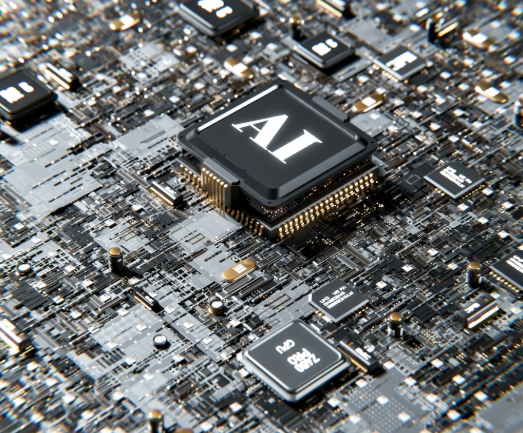
In one college classroom, computer science students are learning to write code with the help of artificial intelligence (AI). Down the hall, business students are using AI to help analyze trends. Next door, dentistry students are using AI to recognize patterns in a patient’s dental scans. Across colleges and universities, one thing is becoming clear: artificial intelligence is profoundly changing the way students are learning.
Colleges have always adapted to changes. When computers and coding started to become prevalent in everyday life, colleges and universities adapted by adding numerous courses and majors centered around computer science. Over time, those once uncommon skills have become essential for everyday life. With the introduction of artificial intelligence, colleges must once again rethink what students need for success.
What makes AI different from any other advancement is the speed at which it has spread. Something that was only found in research labs not too long ago is now available to anyone with a web browser. Because of this, many college professors are changing their syllabi and curriculum to better fit the changing environment. Professors who recognize that AI use will be inevitable in the future are teaching students how to properly use it, and others are changing assignments so that students must show their work or explain their thinking.
The influence of AI can be seen across numerous fields and majors. In NC State’s course description for computer science, a relatively new undergraduate concentration option: Artificial Intelligence. In the health/medicine fields at UNC-Chapel Hill, aspiring doctors are learning how to use AI to analyze patient scans. Of course, these AI systems do not replace doctors, but can be used as a safeguard to catch anything that doctors may miss. Outside of medicine and science, AI is also drastically changing learning for students. Some business courses promote the use of AI by using it to analyze customer trends and patterns.
For the majority of students, using AI feels more practical, as graduates that are entering the workforce are bound to encounter AI in some shape or another. By understanding how generative AI works, students can use it to solve problems efficiently and effectively rather than just blindly trusting technology.
AI also makes learning easier in different ways. Students can use AI tools to revise content or generate notes for a missed lecture by uploading a voice recording to an AI tool.
For students who may need a helping hand, AI is there to help them understand concepts and ideas through detailed explanations.
At the same time, AI raises serious concerns. Professors worry that students may be turning in artificially generated work that doesn’t reflect their understanding of the subject. Colleges are also dealing with problems of cheating and access. Not all students are able to use the same advanced AI tools to supplement their learning, and relying solely on these tools could widen the gap.
In response to these concerns, colleges are setting clear boundaries regarding AI use. Rather than banning AI outright, many colleges are teaching students the correct way to use it and when using it crosses the line. Additionally, professors emphasize that AI should help students learn, not do all of their coursework for them.
Artificial intelligence is changing and evolving in ways that are hard to predict, and its role in education for future generations is even more uncertain. However, one thing is for sure: AI is here to stay. In the same way that computers became an integral part of everyday life and education, AI is becoming increasingly common— especially in classrooms. How colleges and universities handle this dramatic change to education will forever shape generations to come.