





























































Mary Shelley was by no means an average person. She lived her life with as much passion as she did curiosity. Although her life was filled with tragedies, it was not a tragic one. In the end, she would cement her legacy as one of the most prolific writers of the 19th century. From motherless child to mother of Sci-Fi, Shelley has shaped academics and casual readers’ minds alike on what storytelling is and can be.
Born on Aug. 30, 1797, Mary Wollstonecraft took her first breaths already on track to experience her first major loss. Just eleven days later, on Sept. 10th, Shelley’s mother would pass away from complications after giving birth, a mixture of an infection from the doctor’s unwashed hands and a fever (University of Delaware). Though Shelley never knew her mother, the woman shaped her writing and views on life in a very deep way. While her father threw himself into deep grief, he still encouraged his daughter to learn about her mother and surrounded Shelley with her writings growing up. Being raised in a household without a mother, surrounded only by her father and brothers, Shelley struggled. In 1801, Shelley’s father married again to a widow named Mary Jane Clairmont, and they moved in with her and her two boys soon after (University of Oxford).
When Shelley was fifteen years old, she met Percy Shelley. He was twenty at the time and married to a woman named Harriet Westbrook. P. Shelley was a big admirer of Shelley’s father and frequently visited the household. Shelley and P. Shelley found each other to be intellectual soulmates; with her, he was made the center of attention, something that he wasn’t getting with his current wife, as she was busy with their young child and expecting another. A year later, in 1814, the two would meet again and decide to run off together and elope. This enraged Shelly’s father and caused him to disown her, as what transpired went against all social standards of the 19th century. a He refused to see his daughter for two years, causing much strain on their already weak relationship.
Not even a year later, in 1815, Shelley gave birth to the couple’s first child, Clara. Unfortunately, the baby was born prematurely and died just a few days after. Mary would later write in her diary that she had a dream in which her baby came back to life when warmed by the fire. In Jan. 1816, Mary gave birth again, this time to a boy named William.
In June of 1816, the two took a summer vacation to Switzerland with their friend Lord Byron. Unfortunately for the group, 1816 was known as “the year without summer”. Unrelenting rain, low-hanging fog and sometimes even frost meant the group was more often than not stuck inside the villa they were renting. They would read poems, debate and talk late into the night to pass the time. One of the days, they fell onto the topic of whether human corpses could be re-animated after death, and what started as a conversation quickly turned to a debate. Shelley, who had coined herself as an avid listener, took in everything the men said as they debated. The following days were spent reading horror stories, sad poems and a lot of arguing. After a long spell of annoyance and boredom, Lord Byron announced a challenge: write a ghost story better than the ones they had just read.
Shelley wanted to write a story as well, but couldn’t seem to find inspiration. “I was asked each morning, and each morning I was forced to reply with a mortifying negative,” (History) she later wrote. But one night, she had a vision of sorts, what we would now call a waking dream, where she was fully away but transported to another world. “I saw the hideous phantasm of a man stretched out,” she wrote, “and then, on the working of some powerful engine, showed signs of life.” (History) This dream effectively sparked her inspiration for Frankenstein.
In Dec. of that same year, P. Shelley’s legal wife died, leaving Shelley and him able to actually be married. Up until that point, they had effectively been “playing house” but in the eyes of the law were not husband and wife. Fifteen days after she was pronounced dead the two went to London to get married, and it was there Shelley reconciled with her father. After a few months of writing, she finished Frankenstein, or the Modern Prometheus, in May of 1817. In Jan. 1818, the novel was released in three installments; Shelley is not named as the author, and many believed it to be her husband’s work. The book didn’t sell very well and had very mixed reviews.
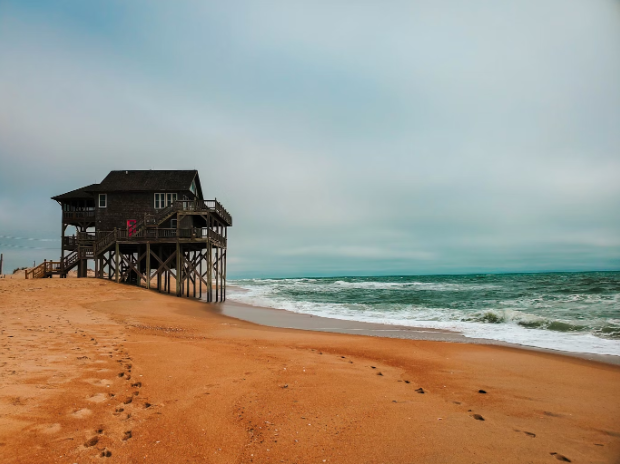
The next few years of her life would be riddled with tragedy and death, starting in June of 1819, when the couple’s son, William, would die of malaria in Italy, leaving the couple with no living children. In Nov. of that same year, Shelley would end up giving birth to their son Percy Florence, their only child to survive infancy. Three years later, in 1822, Shelley suffered a terrible miscarriage, causing her to almost die. She would only survive due to the efforts of her husband, who acted quickly and nursed her back to health. Unfortunately, the next month, Percy would die in a boating accident while sailing in the Gulf of Spezia, widowing the 24-year-old Mary.
After her husband dies and Shelley throws herself into writing, she publishes “Valperga”(1823), which is a historical novel set in medieval Italy but touches on contemporary issues of the time. This was the 2nd edition of Frankenstein (1823), which was edited by William Goodwin and credited to Shelley as the author. This version is not used as an authoritative text due to Goodwin’s edits. Shelley also received her first stage adaptation of the play around this time. Next came “The Last Man” (1826), her post-apocalyptic, futuristic plague novel that contained fictionalized versions of both P. Shelley and her friend, Lord Byron. Finally, she released a 3rd edition of Frankenstein in Oct. of 1831, in which she combined the three installments back into one novel. 140 years after she wrote her novel “Mathilda” (written 1819), it was published by various presses in 1959 and is today considered one of her most controversial pieces, dealing with themes of incest, trama and self-evaluation.
After 1831, Shelley would go on to live a mostly quiet life. After her father-in-law died, her son, Percy Florence, became financially stable and she was allowed to move into the Shelley family home, Field Place. She would go on to suffer from a multitude of health problems, including intense headaches, severe pain and even temporary paralysis, which often made reading and writing difficult. Despite her health, she still continued to write until the end of her life, working on her late husband’s biography, which remains unfinished to this day. She would go on to die in London on February 1, 1851, at age 53, with most signs pointing to a brain tumor. Due to the wishes of her son, she never had a proper autopsy and coroner’s report, so it’s only speculation. She was then buried in St. Peter’s Churchyard in Bournemouth, England, where people can still visit her grave and pay homage to the literary great today.
While Shelley’s life was tragic, it seems to be one fitting of a pioneer in Gothic horror and Sci-fi. She has shaped how we view what writing can be, the female story and our ideas on life in the 19th century. Even though she wrote something that was meant for an audience centuries ago, her works still stand today because of her ability to draw upon the world around her and make something so uniquely human that it transcends across generations. She was more than just a writer; she was a wife, mother, daughter and intellectual. While no one will ever know what was truly going on in the mind of Shelley, there are pieces of her left today in her writing. Because of that, she truly cemented her legacy, not a tragic one but instead one of tragedy.